
Spring Tide
Spring Tide marker for general dive planning around Dover. Use as guidance only. Final dive timings depend on skipper judgement, weather, sea state, tidal data and site conditions.
Spring Tide marker for general dive planning around Dover. Use as guidance only. Final dive timings depend on skipper judgement, weather, sea state, tidal data and site conditions.
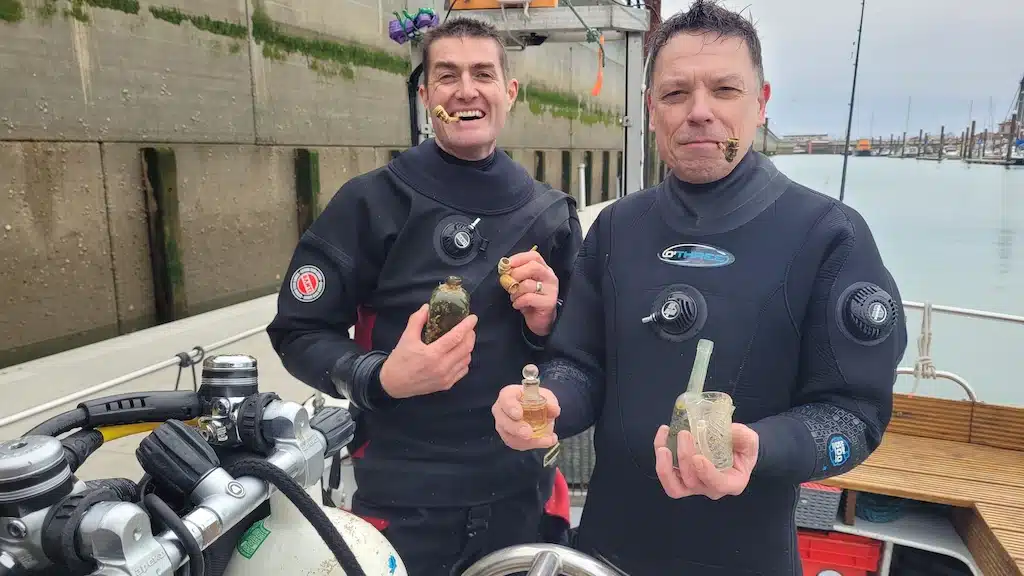
For divers, Loanda is one of those wrecks that rewards curiosity as much as good buoyancy. She lies upright in roughly 17 to 23 metres, standing several metres proud, with exposed engine remains, an intact propeller, and a cargo story worthy of a Victorian dockside whisper. Reports mention gin and champagne bottles, clay pipes, perfume bottles, trading beads, and the persistent tale of newly minted shillings, although the shilling story is not supported by the manifest. It’s shallow, atmospheric, artifact-rich and very much a slack-water dive, the kind of Dover wreck where every broken bottle and clay pipe feels like it has been waiting 116 years to be noticed.

On 8 September 1915, Monarch was on passage from Santander to Newport with iron ore when she struck a mine laid by the German submarine UC-5, about 2.5 miles south of Folkestone, near the defence boom gate. She sank with frightening speed, reportedly in around three minutes, with three lives lost. The wreck lies upright but dispersed in roughly 21 to 28 metres, with boilers, triple-expansion engine remains, cable gear, pulley wheels, GPO-marked finds and cable-related fittings still giving the site its unmistakable character. For divers, Monarch is a cracking First World War Channel wreck: part industrial archaeology, part wartime casualty, and part underwater museum of the age when Britain’s messages travelled through copper, gutta-percha and optimism.
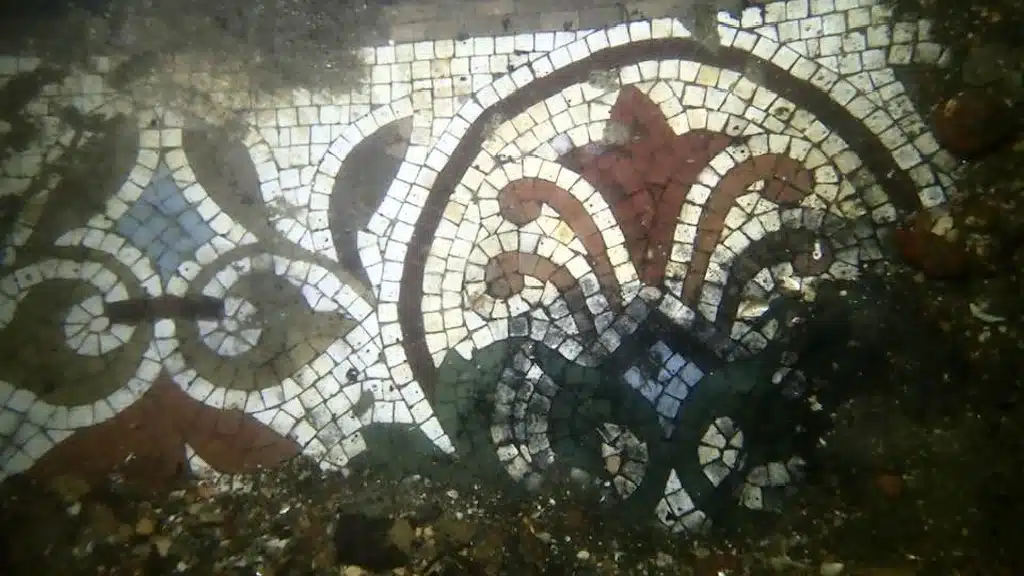
On 31 October 1915, Toward struck a mine laid by the German minelaying submarine UC-6, commanded by Matthias Graf von Schmettow, near the South Foreland / Dover area. The explosion tore into her beneath No. 2 hold, just forward of the bridge. She caught fire, settled quickly, and was abandoned. Remarkably, all the crew were rescued, including men who had jumped into the sea. For divers, Toward is a proper First World War Channel wreck: mine warfare, wartime cargo, a dramatic sinking, and a site still rich with clues from a ship that went down in one of the Dover Patrol’s most dangerous corridors.
Her loss came on 24 July 1894, while travelling from Rotterdam to Bilbao in ballast. Lloyd’s casualty returns list her as lost after a collision, about 4 miles south-south-east of Folkestone. Tees Built Ships adds that the other vessel was the SS Trinidad, although another local wreck list appears to name Setubal, so I’d treat the identity of the colliding ship with caution unless you want that rabbit hole on the event page. For divers, this is a compact Victorian steamer wreck in classic Channel territory: no romantic cargo, no glittering treasure chest, but plenty of iron, impact, tide, traffic and story. The sea kept the interesting bit, obviously.
Neap Tide marker for general dive planning around Dover. Use as guidance only. Final dive timings depend on skipper judgement, weather, sea state, tidal data and site conditions.

On 28 March 1916, Saxon Prince disappeared off Dover / Kingsdown in a violent south-westerly Force 12 storm, while serving on Admiralty patrol work. Some records mention possible mining, but the strongest contemporary explanation is foundering in the furious gale. The Maritime Archaeology Trust records that all 12 men aboard were lost, and likely remains now lie in about 22 metres of water, roughly off the cliffs between St Margaret’s Bay and Kingsdown. For divers, this is a small wreck with a hard human story: a former fishing trawler turned wartime minesweeper, lost not to gunfire or torpedo, but to the Channel itself at its most brutal.
On 25 July 1940, during the Battle of Britain period, Leo was part of Convoy CW8, known as "Peewit", when German Ju 87 Stuka dive-bombers attacked the convoy off Dover. The raid became known as Black Thursday, with several ships sunk, including Leo, Corhaven, Henry Moon, Polgrange, Portslade and Summity. Leo was bombed and machine-gunned from the starboard quarter and sank close to Dover. Sources differ on casualties, with one dive account giving six lost from 27 crew, while a memorial source records 10 crew lost, so I’d avoid a precise number on the event page unless you want to add a footnote and ruin everyone’s cheerful booking mood. For divers, this is a compact wartime collier with real atmosphere: coal cargo, Battle of Britain skies, Stuka attack, and a wreck lying in about 32 metres, only a short run from Dover.
On 23 March 1916, Corona struck a mine off Ramsgate / in The Downs, believed to have been laid by the German minelaying submarine UC-6, commanded by Matthias Graf von Schmettow. Wrecksite and naval loss summaries record 13 lives lost, with the position often given around 51°08'50"N, 1°25'00"E. For divers, this is a compact but atmospheric Dover Strait war wreck: a requisitioned trawler, a UC-boat minefield, and a loss tied to the same deadly Channel campaign that claimed several merchantmen and patrol vessels in 1916. Small wreck. Heavy story.
On 21 February 1916, Carlton was mined off Folkestone and lost in the Dover Strait. The available naval loss records give the cause as a mine from an unknown source, so I’d avoid confidently naming the U-boat unless you’ve got a local source tying it down. For divers, Carlton is a compact but evocative First World War wreck: a Grimsby fishing trawler turned minesweeper, lost after only a short spell in naval service, in the same brutal Channel waters where small patrol craft worked daily against mines, weather and traffic. Small wreck, hard life, proper Dover Patrol story.

On 9 March 1900, Cuvier was struck on the starboard side in the Dover Strait by the Norwegian steamer Dovre, which was bound from Burntisland to Dieppe with coal. The collision tore open her side, flooded the engine room, and she sank in minutes, around 6 miles east of the East Goodwin Lightvessel. Historic England records heavy loss of life, with sources giving 26 to 28 crew lost and only a handful of survivors picked up by the steamer Windsor. For divers, Cuvier is a classic Goodwins-area wreck: a Victorian cargo steamer, a sudden night collision, a grim human story, and a site known for recovered Maastricht-marked bowls, mugs, chamber pots, portholes and crockery. It’s the kind of wreck where the artefacts make the story feel oddly domestic, which somehow makes the tragedy hit harder.
By 1945 she was serving as an anti-submarine trawler under Skipper Lieutenant Sidney John Cory, DSC, RNR. On 8 July 1945, two months after VE Day, La Nantaise sank in The Downs, near the Goodwin Sands Lightship, after a collision with the SS Helen Crest. Records list 11 lost from a crew of 25, with survivors rescued by the tug Empire Henchman. For divers, this is a compact but poignant Channel wreck: a fishing trawler turned patrol vessel, French in name, British in service, lost after the war in Europe had supposedly finished. The sea, naturally, did not read the memo.