• SS Cuvier (1900)

    Dover Marina Esplanade, Dover, Kent, United Kingdom

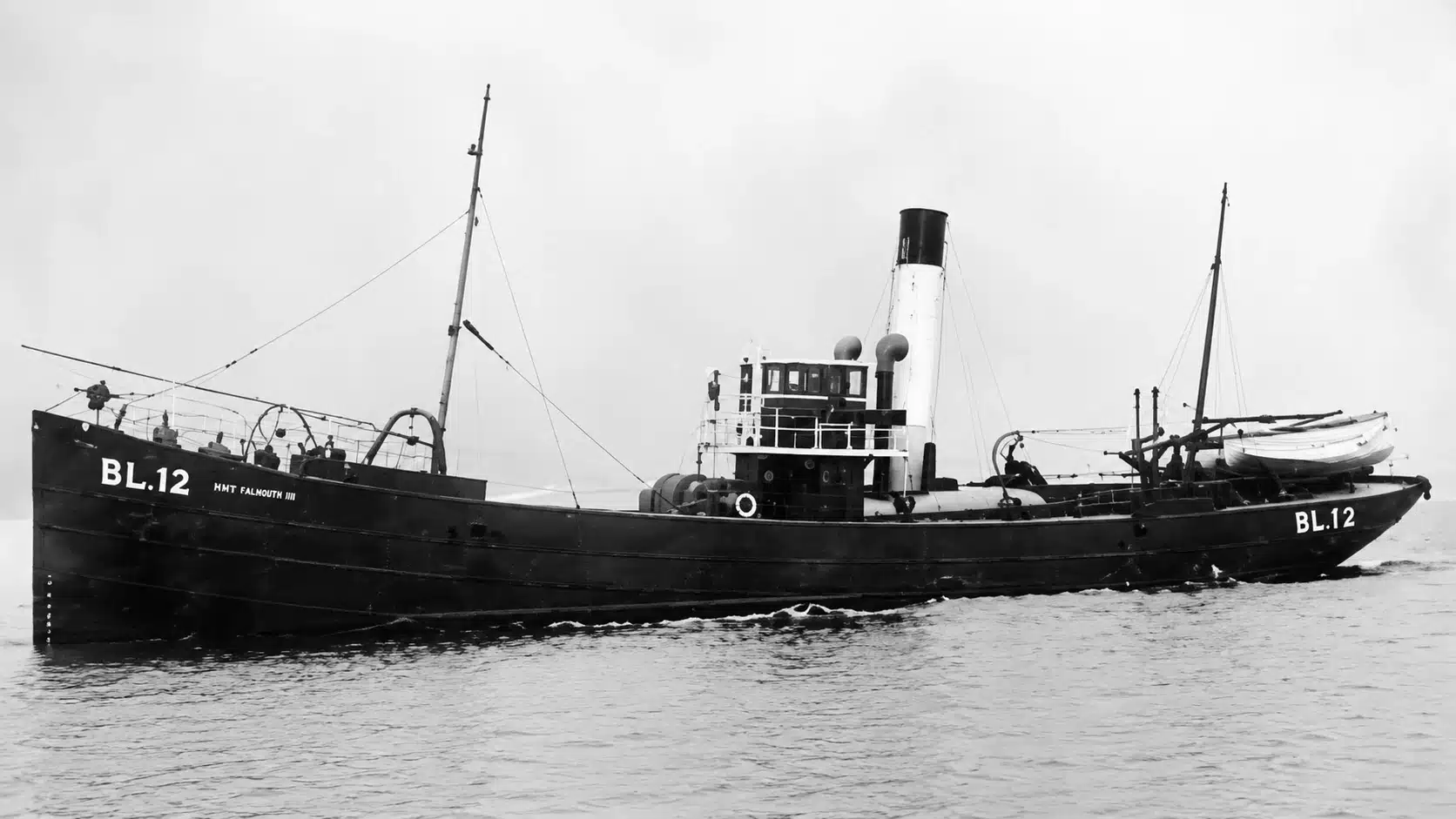
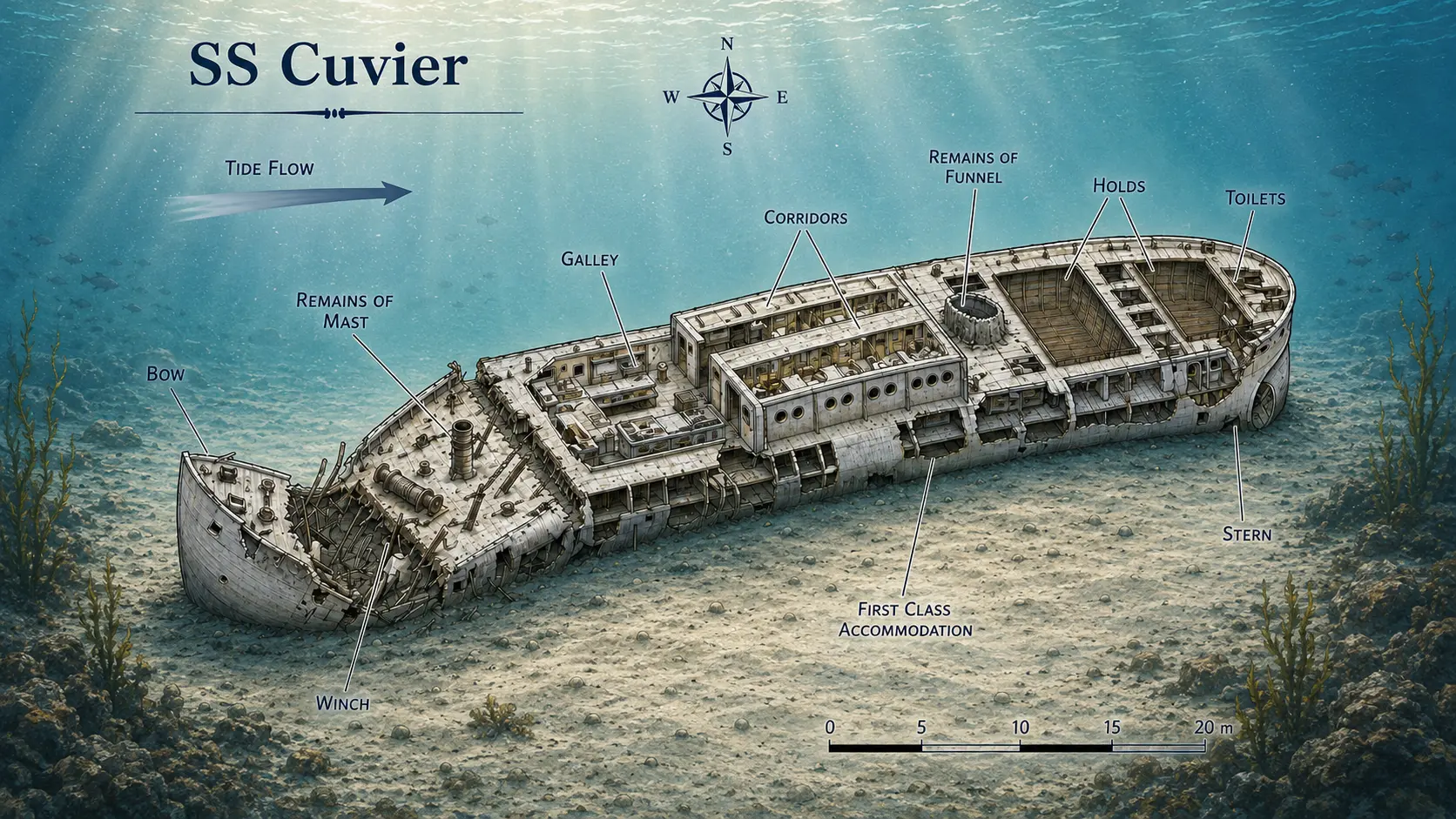
    SS Cuvier was carrying cargo for Brazil when SS Dovre tore into her near the Dover Strait in 1900. Within five minutes she had gone, leaving three survivors clinging to a capsized boat and at least 26 men lost in one of the Channel's sharpest civilian wreck tragedies.

  • Unidentified Wreck – Offshore

    Dover Marina Esplanade, Dover, Kent, United Kingdom

    This deeper offshore wreck dive heads beyond the usual inshore marks to a more serious Channel site, where depth, tide and distance add real commitment. Expect mystery, machinery, wreckage and the chance to help piece together a story that still refuses to surface politely.

  • Unidentified Wreck – Offshore

    Dover Marina Esplanade, Dover, Kent, United Kingdom

    This deeper offshore wreck dive heads beyond the usual inshore marks to a more serious Channel site, where depth, tide and distance add real commitment. Expect mystery, machinery, wreckage and the chance to help piece together a story that still refuses to surface politely.

  • Cullins Buffet Dinner

    Cullins Yard 11 Cambridge Road, Dover, Kent, United Kingdom

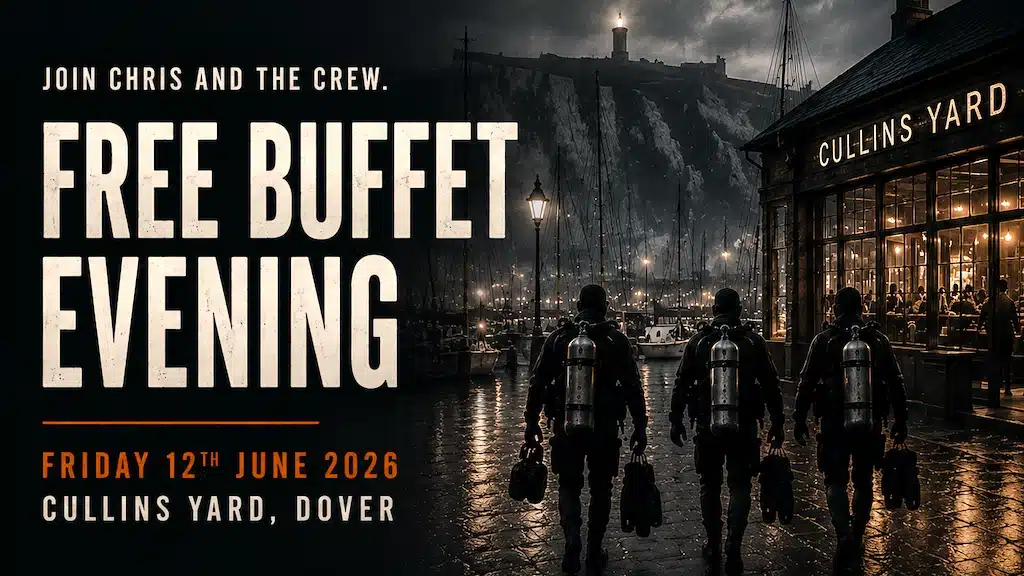
    Hosted by Mutiny Diving, the buffet is on us. Bring your appetite, settle in for the evening, and if you can, consider a donation to the RNLI, whose crews stand ready when the sea decides to remind us who is really in charge.

    Free
  • SV Mindora (1864)

    Dover Marina Esplanade, Dover, Kent, United Kingdom

    Her career was brutally short. On 28 November 1864, Mindora collided in the English Channel with the Khersonese, another outward-bound sailing ship, reportedly on passage from London to Calcutta. Contemporary shipwreck listings place the collision about 8 nautical miles south-west by west of South Foreland, with Mindora sinking and the other vessel abandoned in a sinking condition. For divers, this is a proper Victorian mystery wreck: a young barque lost almost as soon as her story began, a collision in one of the world’s busiest sea lanes, and a seabed site that still gives up small clues from a long-vanished age of sail.

  • HMT Étoile Polaire (1915)

    Dover Marina Esplanade, Dover, Kent, United Kingdom

    On 3 December 1915, Étoile Polaire struck a mine and sank off the South Goodwins. The minefield is recorded as having been laid by the German minelaying submarine UC-1, commanded by Kapitänleutnant Egon von Werner. Her wreck has had a confusing afterlife: Canterbury Divers and Historic England both note that a site once listed as HMT Cayton Wyke was positively identified as Étoile Polaire when her bell was recovered. The wreck lies in about 27 metres, stands up to 5 metres proud, and is described as fairly intact, with a blown-off bow, open holds, intact stern and surviving superstructure. For divers, this is a cracking Dover Patrol wreck: compact, atmospheric, strongly identified, and close enough to the Goodwins to add that little pinch of "this place has been eating ships for centuries".

  • SS Laristan (1899) & SS Denbighshire (1887)

    Dover Marina Esplanade, Dover, Kent, United Kingdom

    Close beside her lies the older Denbighshire, lost in 1887 and later identified by her recovered bell. Historic England notes her wreck lies close to Laristan, while Canterbury Divers describes the Denbighshire as sitting only about 10 metres from the bigger Laristan, in a maximum depth of about 31 metres, standing around 5 metres proud. For divers, the appeal is obvious: two Victorian wreck stories in one dive, one a cargo steamer loaded with iron ore, the other an earlier casualty close enough to turn the seabed into a historical puzzle. It is a cracking Dover site for anyone who likes machinery, structure and a little identity intrigue with their slack water.

  • SS Loanda (1908)

    Dover Marina Esplanade, Dover, Kent, United Kingdom

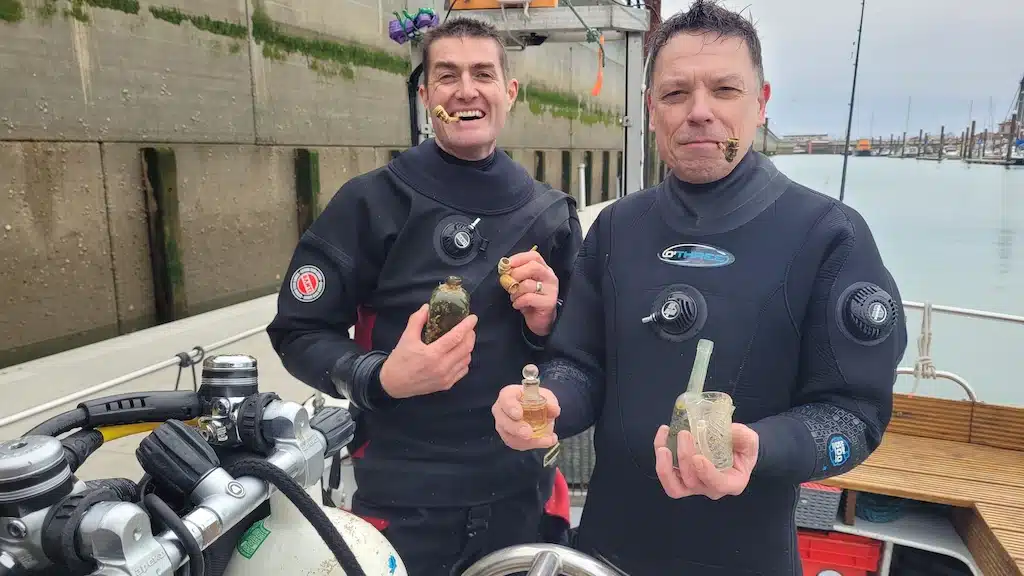
    For divers, Loanda is one of those wrecks that rewards curiosity as much as good buoyancy. She lies upright in roughly 17 to 23 metres, standing several metres proud, with exposed engine remains, an intact propeller, and a cargo story worthy of a Victorian dockside whisper. Reports mention gin and champagne bottles, clay pipes, perfume bottles, trading beads, and the persistent tale of newly minted shillings, although the shilling story is not supported by the manifest. It’s shallow, atmospheric, artifact-rich and very much a slack-water dive, the kind of Dover wreck where every broken bottle and clay pipe feels like it has been waiting 116 years to be noticed.

  • Unidentified Wreck – Offshore

    Dover Marina Esplanade, Dover, Kent, United Kingdom

    This deeper offshore wreck dive heads beyond the usual inshore marks to a more serious Channel site, where depth, tide and distance add real commitment. Expect mystery, machinery, wreckage and the chance to help piece together a story that still refuses to surface politely.

  • SS Maine (1914)

    Dover Marina Esplanade, Dover, Kent, United Kingdom

    Before the First World War had even begun, the small steel coaster SS Maine met her end off Dover after colliding with the Spanish vessel José de Aramburu on 2 April 1914. Her crew survived, but the ship went down near the harbour approaches, leaving behind a wreck now better known by a far more memorable name.

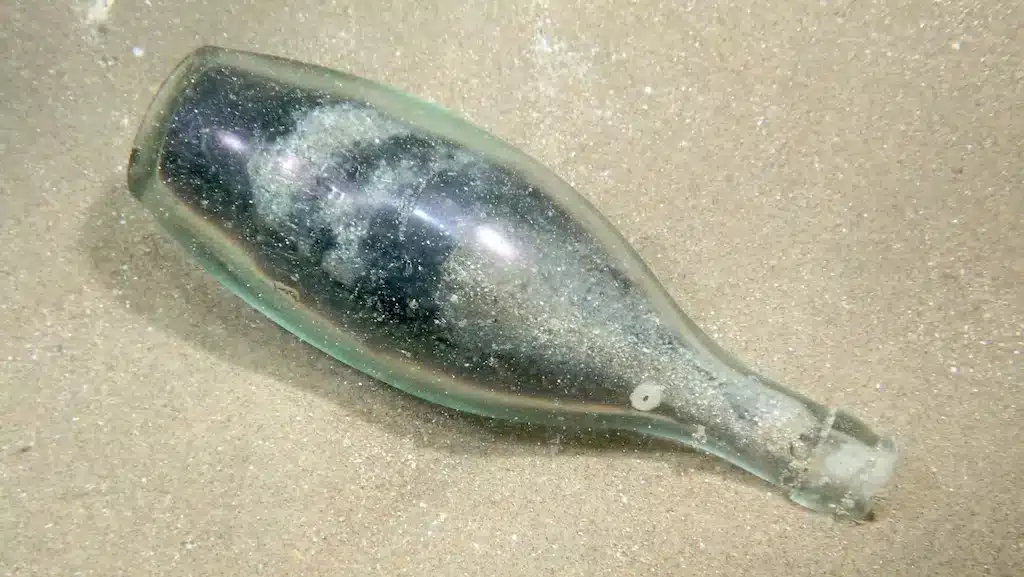
    Divers call her the Perrier Wreck because of the bottles scattered through the site. A collision, a lost coaster, and a seabed full of fizzy-water history. Dover wreck diving does like to keep things gloriously odd.

  • HMT Falmouth III – FY152 (1915)

    Dover Marina Esplanade, Dover, Kent, United Kingdom

    A small Aberdeen-built fishing trawler became a Royal Navy minesweeper, then vanished in one of Dover’s deadliest First World War minefields. HMT Falmouth III, FY152 struck a mine laid by German submarine UC-5 on 19 November 1915, two days after the same field sank the hospital ship HMHS Anglia.

    The blast blew Falmouth III in half and killed seven men. Even more strangely, she is said to have sunk directly onto Anglia’s wreck before a storm later shifted her. A compact Dover Patrol wreck, a brutal Channel story, and another reminder that minesweeping was courage wrapped in thin steel.

  • HMT Lydian – 162 (1915)

    Dover Marina Esplanade, Dover, Kent, United Kingdom

    A Milford Haven fishing trawler turned wartime patrol vessel, HMT Lydian was doing the dangerous work of the Dover Patrol when she struck a German mine off South Foreland on 18 September 1915. The mine had been laid by UC-6, one of the small German submarines turning the Channel into a hidden battlefield. Eight men died when Lydian sank. Today her wreck lies in about 23 to 24 m of water east of South Foreland, a compact but powerful First World War dive with a bell-confirmed identity, recovered artefacts and a brutal reminder that minesweepers often found mines the hard way.

×
×

Basket