• Unidentified Wreck – Offshore

    Dover Marina Esplanade, Dover, Kent, United Kingdom

    This deeper offshore wreck dive heads beyond the usual inshore marks to a more serious Channel site, where depth, tide and distance add real commitment. Expect mystery, machinery, wreckage and the chance to help piece together a story that still refuses to surface politely.

  • SS Cuvier (1900)

    Dover Marina Esplanade, Dover, Kent, United Kingdom

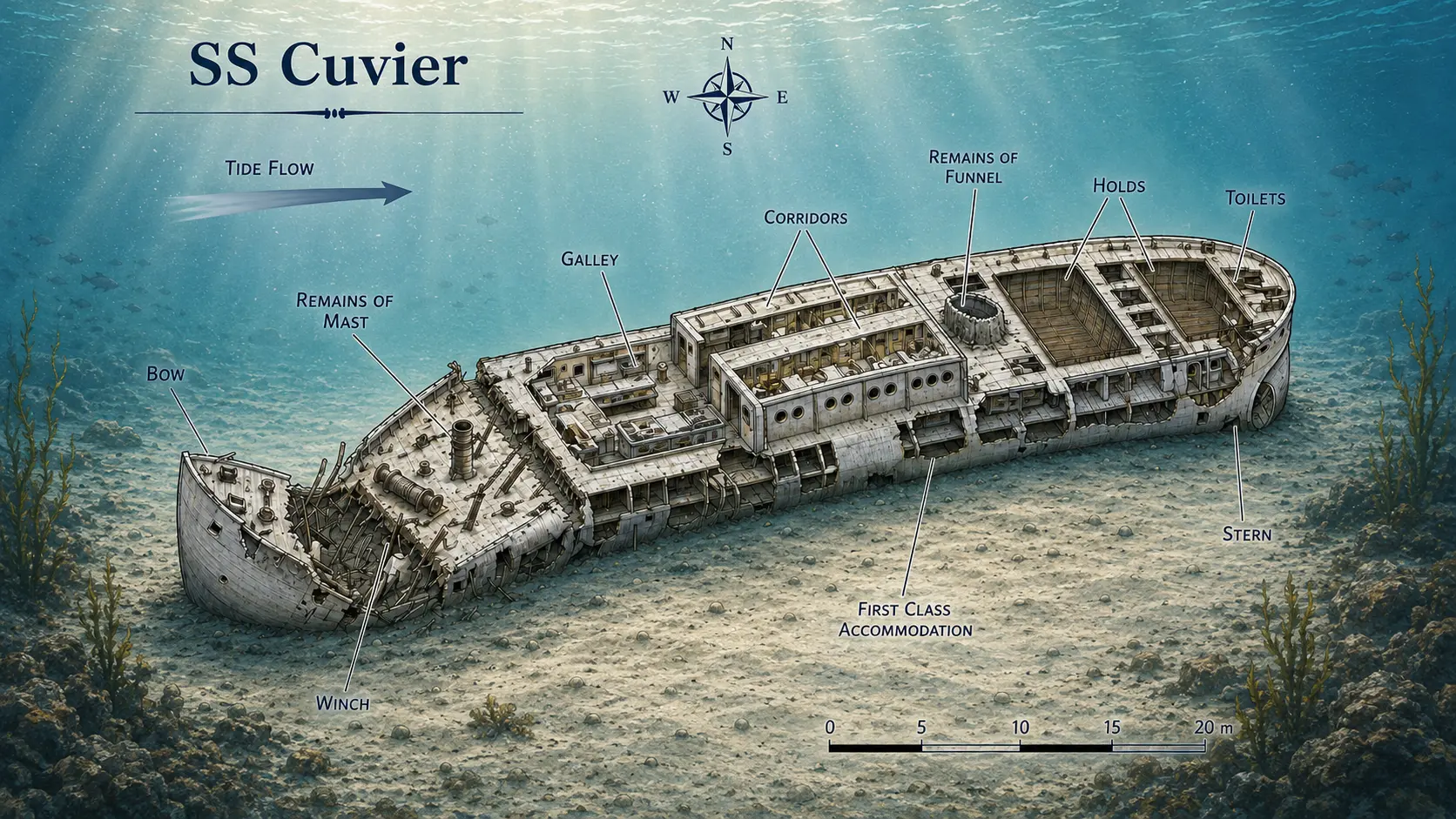
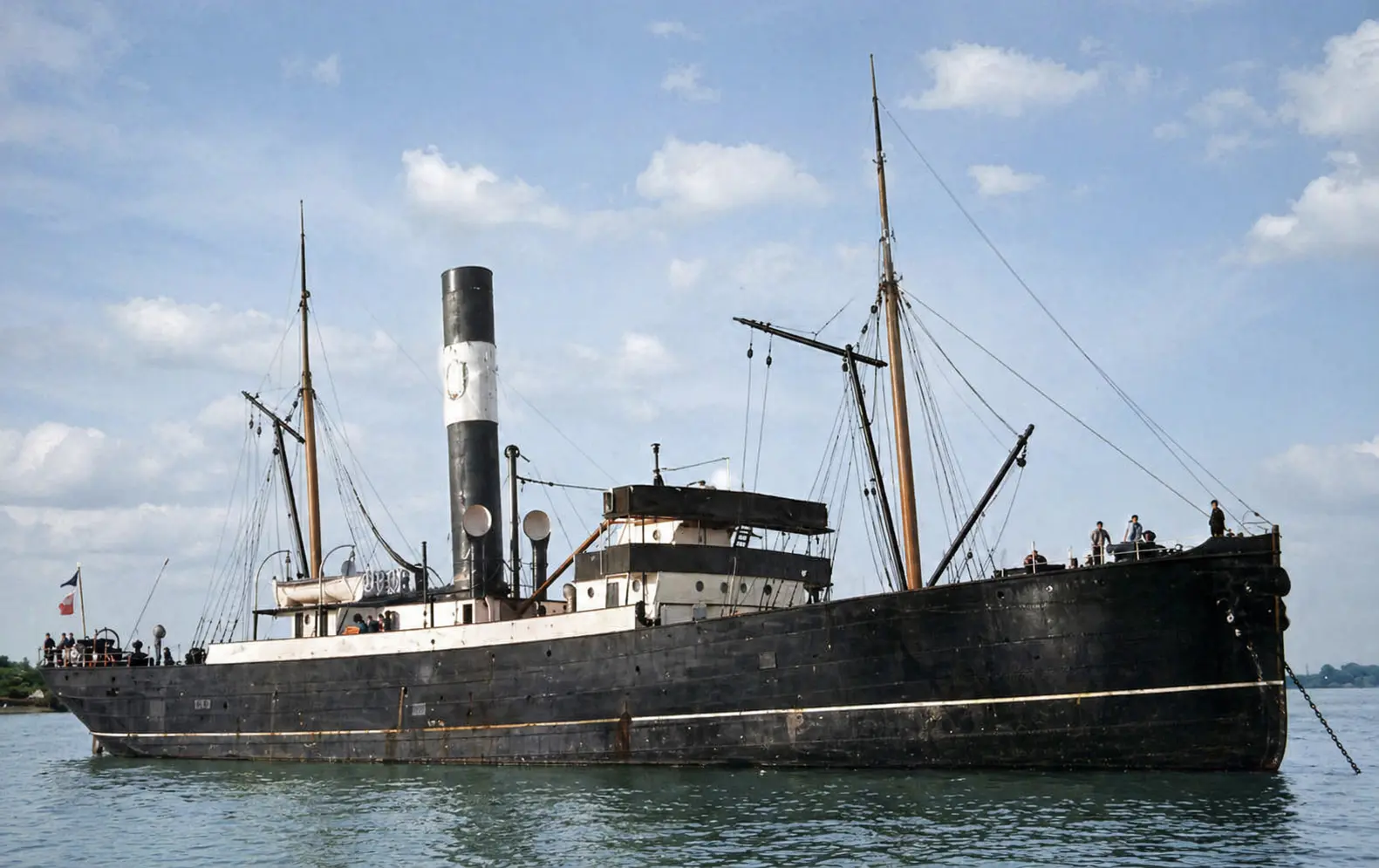
    SS Cuvier was carrying cargo for Brazil when SS Dovre tore into her near the Dover Strait in 1900. Within five minutes she had gone, leaving three survivors clinging to a capsized boat and at least 26 men lost in one of the Channel's sharpest civilian wreck tragedies.

  • SS Unity (1918)

    Dover Marina Esplanade, Dover, Kent, United Kingdom

    SS Unity was carrying ordnance to Calais when UB-57 found her off Folkestone in May 1918. This wreck dive follows a Goole steamer, a deadly Channel crossing, twelve lost crew and a seabed that still holds the small personal traces of a wartime voyage cut short.

  • SS Castor (1894)

    Dover Marina Esplanade, Dover, Kent, United Kingdom

    On 28 July 1894, Castor was on passage from Smyrna, now Izmir, to Amsterdam, having called at Algiers, when she was caught in dense fog off Dungeness / Folkestone and collided with the German barque Ernst. She was struck amidships and sank, but her 25 crew and 3 passengers were all saved. Her cargo gives this wreck its real intrigue: 14 Greco-Roman sculptures and inscriptions, packed in two crates for the Rijksmuseum van Oudheden in Leiden. Divers later recovered several second-century marble pieces from the wreck, including sculptured heads and funerary monuments. Today, Castor is a cracking dive with a rare story: a Dutch steamer, a Channel collision, and classical antiquities lying in the silt like history had dropped its handbag

  • SS Nunima (1918)

    Dover Marina Esplanade, Dover, Kent, United Kingdom

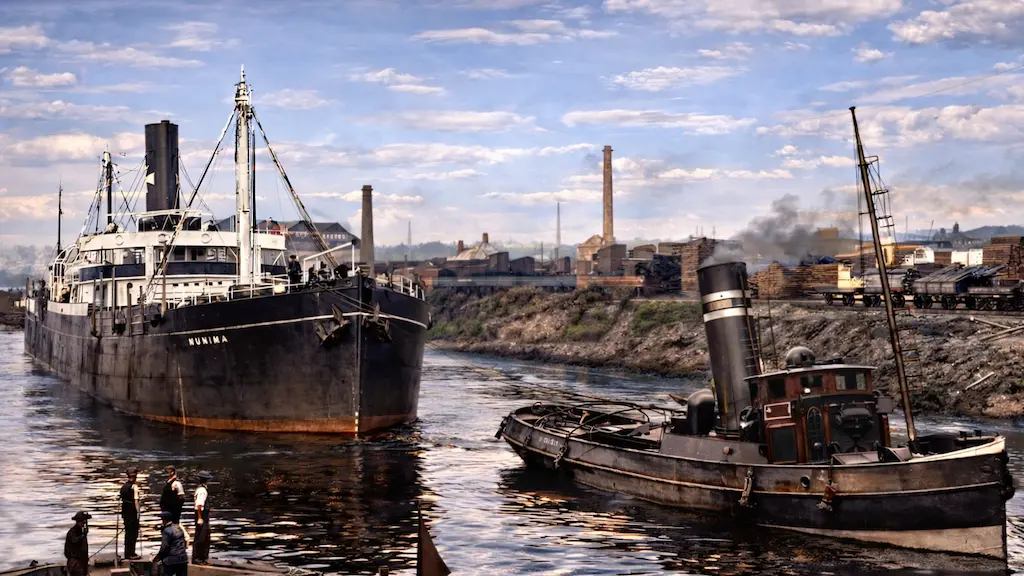
    On 4 January 1918, Nunima was on passage from Bilbao to Middlesbrough with a cargo of iron ore when she sank after a collision off Folkestone, reported variously as with P19 or an unidentified Royal Navy torpedo boat. UKHO-derived wreck data places the wreck at about 50°58.304'N, 1°08.678'E, lying upright and largely intact in roughly 32 metres, with a least depth of around 19 metres over the wreck. No lives were lost, which is a rare mercy in these Channel stories and frankly suspiciously decent of history for once. For divers, Nunima is a big, upright First World War merchant steamer with cargo history, scale, structure and a proper Dover Strait collision story. A solid wreck with presence.

  • Unidentified Wreck – Offshore

    Dover Marina Esplanade, Dover, Kent, United Kingdom

    This deeper offshore wreck dive heads beyond the usual inshore marks to a more serious Channel site, where depth, tide and distance add real commitment. Expect mystery, machinery, wreckage and the chance to help piece together a story that still refuses to surface politely.

  • SS Carmen (1963)

    Dover Marina Esplanade, Dover, Kent, United Kingdom

    On 13 June 1963, Carmen was caught in thick fog in the Dover Strait and collided with the Turkish steamship Sadikzade, about 4.5 miles east of the South West Goodwin light buoy and 9.6 miles east of St Margaret’s Bay. She sank with the loss of two crewmen, while the collision set off an absurdly grim chain reaction: Sadikzade then collided with the Greek motor vessel Leandros, which in turn collided with the British tanker Clyde Sergeant. Today, Carmen lies upright and largely intact in around 44 to 45 metres, with her funnel around 30 metres and superstructure rising into the low 30s. For divers, she is a superb deeper Channel wreck: intact, dramatic, well identified, and carrying the unmistakable scar of a fog-bound collision in one of the busiest seaways on Earth.

  • SS Amplegarth (1918)

    Dover Marina Esplanade, Dover, Kent, United Kingdom

    On 10 May 1918, Amplegarth was on passage from Dunston-on-Tyne to St Nazaire with a cargo of coal when she struck a mine laid by the German minelaying submarine UC-71, commanded by Oberleutnant zur See Walter Warzecha. She sank about 1 mile west-south-west of Dover Harbour. The best Cardiff shipping summary I found records no lives lost, which is a blessedly rare line in a First World War wreck note. For divers, this is a proper Dover war wreck: a big merchant steamer, a working cargo, a UC-boat minefield, and a loss right on the doorstep of one of the busiest wartime ports in Britain.

  • SS Cuvier (1900)

    Dover Marina Esplanade, Dover, Kent, United Kingdom

    SS Cuvier was carrying cargo for Brazil when SS Dovre tore into her near the Dover Strait in 1900. Within five minutes she had gone, leaving three survivors clinging to a capsized boat and at least 26 men lost in one of the Channel's sharpest civilian wreck tragedies.

  • SS Efford – Stern (1940)

    Dover Marina Esplanade, Dover, Kent, United Kingdom

    Efford sank after the collision, reportedly cut in two, and her remains are known as two separated wreck sections off Dover. That makes her an especially interesting dive: not a grand liner or warship, but a compact coaster with a dramatic physical story written into the seabed. For divers, Efford offers exactly the sort of Channel wreck that rewards close inspection: broken structure, wartime context, collision damage, and the odd thrill of knowing the bow and stern are not necessarily where polite naval architecture intended them to be.

  • HMS Flirt (1916)

    Dover Marina Esplanade, Dover, Kent, United Kingdom

    HMS Flirt went to help stricken drifters during the 1916 Battle of Dover Strait, then German torpedo boats caught her at point-blank range. This wreck dive follows a Royal Navy destroyer lost in minutes, with sixty dead, nine survivors and one of the Dover Patrol's sharpest night-fighting stories.

  • MV Andaman (1953)

    Dover Marina Esplanade, Dover, Kent, United Kingdom

    On 24 May 1953, Andaman collided with the Panamanian steamer Fortune about 3 miles south of the South Goodwin Lightvessel. She began sinking, and her 38 crew abandoned ship into two boats. The Dover lifeboat launched, but the crew had already been picked up by the SS Arthur Wright, before being transferred to the lifeboat and landed at Dover. No lives were lost. For divers, Andaman is a fine post-war Channel wreck: a substantial Swedish cargo ship, lost in fog near the Goodwins, with a clean rescue story and enough size, structure and atmosphere to make her far more than a name on a chart.

×
×

Basket