
- This event has passed.
SS Sabac (1962)
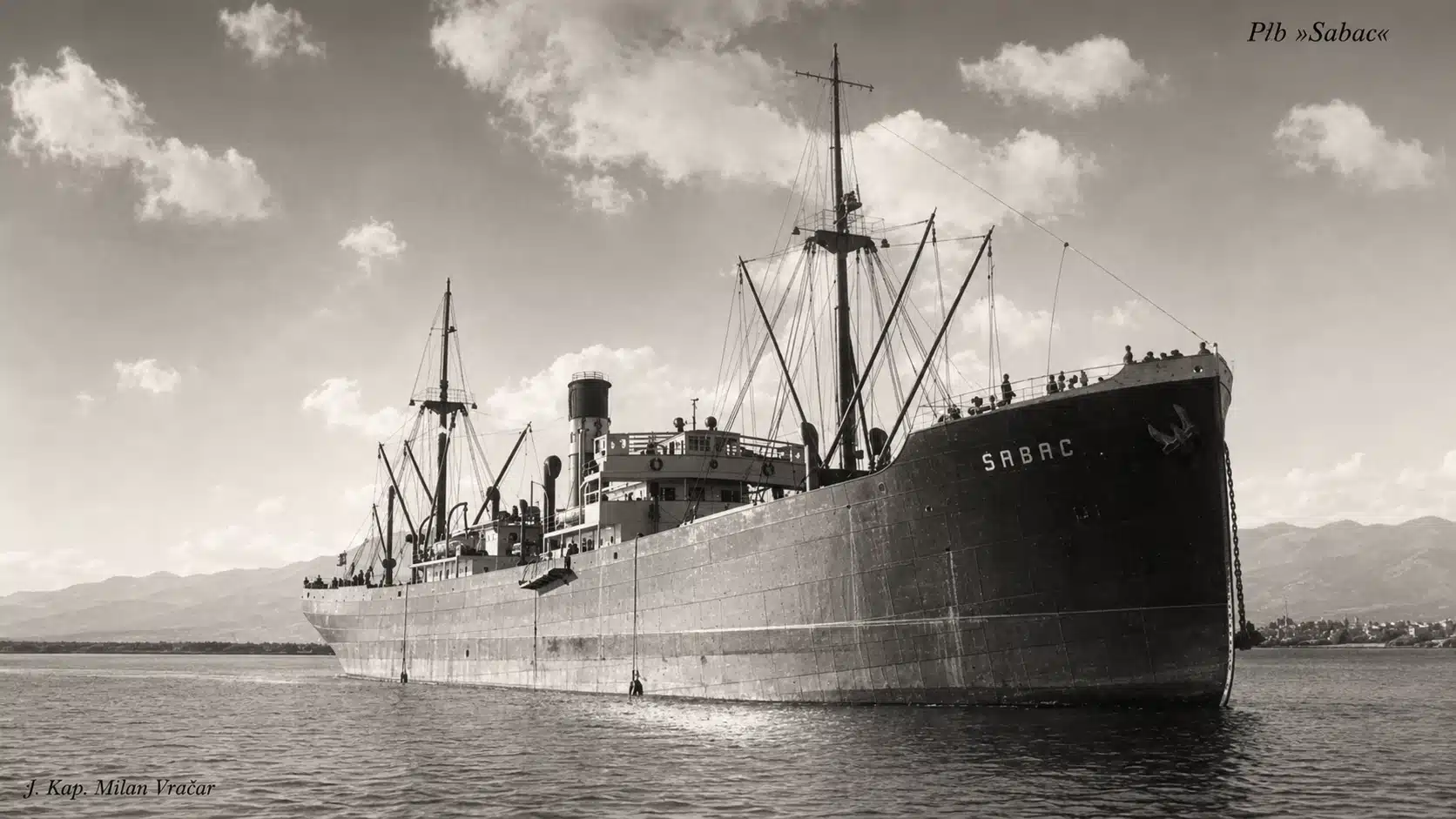
The SS Sabac wreck dive takes us to one of the Dover Strait’s most tragic post-war merchant ship losses. Sabac was a Yugoslav steam cargo ship of 2,811 gross tons, lost in thick fog after a collision near the Goodwin Sands in January 1962. She now lies in deeper Channel water, with a story that links German shipbuilding, wartime salvage, Yugoslav trade and a bitterly cold night off Dover.
SS Sabac wreck dive: history of the ship
Sabac began life in 1922 as Marie Leonhardt. Stettiner Oderwerke built her for the German shipping company Leonhardt & Blumberg. During the Second World War, she suffered damage during an Allied air raid on Hamburg on 18 June 1944. After the war, salvors raised and repaired her. She then entered Norwegian service as Skottnes, before Yugoslav owners acquired her in 1947.
Under Yugoslav ownership, the ship first traded as Susak. Later, she received the name Sabac and joined the fleet of Kvarnerska Plovidba, based in Rijeka. By 1962, she was working as a practical cargo steamer rather than a glamorous ocean wanderer, because even ships have to earn their keep somehow.
On her final voyage, Sabac sailed from Ploce to Rotterdam with a cargo of bauxite. Lloyd’s Register records her loss under collision casualties for the first quarter of 1962, noting the voyage, cargo and location of the sinking. You can see the contemporary Lloyd’s record in the Lloyd’s Register Casualty Returns for 1962.
The collision and loss of Sabac
Late on 7 January 1962, Sabac entered the Dover Strait in dense fog. At around midnight, she collided with the British motor vessel Dorington Court, a much larger ship of about 6,223 gross tons. The impact caused catastrophic damage. Contemporary accounts describe Sabac as badly holed, and later local histories state that she was almost cut in two.
The ship sank in less than five minutes. That left the crew with almost no time to launch boats, gather survival gear or escape the cold Channel water. Several nearby vessels joined the rescue, including Dorington Court herself and the British Railways train ferry Hampton Ferry. However, the fog made the search slow and difficult.
Dover and Walmer lifeboats launched after Coastguard alerts in the early hours of 8 January. The RNLI report for June 1962 records fog, a light westerly wind, smooth sea and high water. It also records parachute flares, lifeboat searches, reports from other vessels, and support from aircraft.
Sabac carried 33 crew. Only five survived. Twenty-eight men died, making the sinking one of the worst post-war merchant shipping tragedies in this part of the Channel. Croatian records name four of the dead from the Sibenik area: Sime Radovcic, Sime Misurac, Milivoj Vlahov and Rade Grbelja. Ten crew members were never recovered.
What caused the loss?
The cause of loss was collision in thick fog. Sabac was on a commercial passage from Ploce to Rotterdam with bauxite cargo when Dorington Court struck her about six miles south-east of Dover. The force of the collision and the speed of flooding left Sabac fatally damaged. She sank before rescue vessels could reach most of her crew.
For divers, the SS Sabac wreck dive is more than another deep metal wreck in the Dover Strait. It is a dive into a compact tragedy. The ship had already survived war damage, salvage, repair and several changes of name. Yet her final loss came from the old Channel enemies of fog, traffic and poor visibility.
Divers should expect a serious offshore wreck dive, shaped by depth, tide and Channel conditions. The wreck has been reported with recognisable structure, including parts of the wheelhouse area, domestic fittings and cargo-related remains. As ever, look, record and respect the site. This is a wreck with a human story, not an underwater jumble sale with fins.