
- This event has passed.
SS Lusitania (1915)
SS Lusitania: the forgotten Lusitania off Folkestone
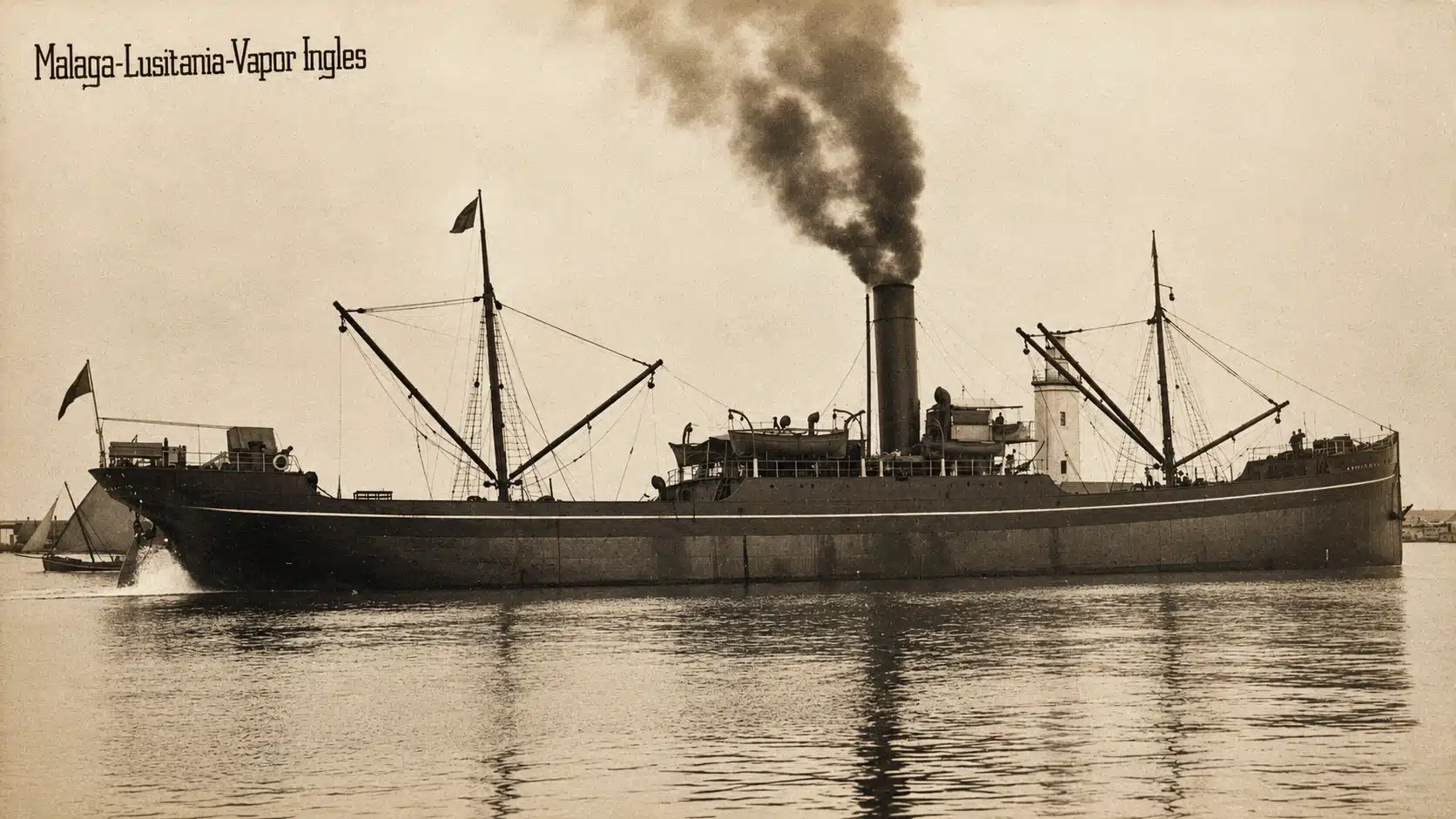
Most people hear “Lusitania” and think of the Cunard liner torpedoed off Ireland in May 1915. However, Kent has its own Lusitania story. Six months after the famous RMS Lusitania sank, the smaller British steamship SS Lusitania was lost off Folkestone during one of the most tragic rescue scenes in the Dover Strait.
SS Lusitania was a British steam cargo vessel built at Blyth, Northumberland, by Blyth Shipbuilding Co. Ltd. Most wreck records give her build year as 1903, although one Lloyd’s Register Foundation catalogue entry appears to list 1902. Her precise launch date needs further confirmation from primary ship registers. At the time of her loss, she belonged to J. Hall, Jun. & Co. of London and was travelling from London to Cadiz with a general cargo.
The minefield off Folkestone Gate
On 17 November 1915, the Dover Strait sat at the centre of Britain’s coastal war. German U-boats had begun using the narrow waters off Kent to lay mines, disrupt traffic and threaten the vital cross-Channel routes. One of those submarines was UC-5, a German coastal minelayer. During the night of 16 to 17 November, UC-5 laid mines near Folkestone Gate, a controlled passage through the defensive system near Dover.
That minefield first claimed HMHS Anglia, a hospital ship returning from Boulogne to Dover with wounded soldiers, medical staff and crew. Anglia struck a mine at about 12.30 pm, roughly one mile east of Folkestone Gate. The explosion hit forward on the port side, and the ship began to sink quickly by the bow. Reports differ on exact numbers, but the loss took about 10 to 20 minutes and killed around 164 people.
Lusitania goes to the rescue
SS Lusitania was nearby when Anglia struck the mine. Rather than stand off, she moved in to help. Her crew lowered two rescue boats and began picking up survivors from the hospital ship. In doing so, Lusitania became part of Anglia’s rescue effort, alongside vessels including HMS Ure, HMS Hazard, HM Torpedo Boat No. 4, Langton and SS Channel Queen.
Then the rescue turned into a second disaster. While recovering survivors, SS Lusitania also struck a mine and sank. Some of those pulled from Anglia’s wreck had to be rescued again after Lusitania went down. The detail gives this wreck its particular weight: Lusitania was not lost while fleeing danger, but while moving towards it to save others.
Casualties and survival
Unlike the hospital ship Anglia, SS Lusitania appears to have lost none of her own crew. The Maritime Archaeology Trust gives her crew as approximately 25, all of whom survived. It also records that the last person to leave the ship was 14-year-old Assistant Steward Herbert Scott.
The wider disaster, however, carried a heavy human cost. Anglia lost more than 160 people, including wounded soldiers, medical staff and crew. The Maritime Archaeology Trust gives the losses as more than 160, including ten medical staff and 25 crew. Wessex Archaeology cites an estimate of about 164 dead, including one nursing sister, nine RAMC staff, four army officers, 125 other ranks and 25 crew.
The wreck today
Today, the remains of SS Lusitania lie off Folkestone at about 30 metres, within the same First World War wreck landscape as HMHS Anglia. The two wrecks form part of a dense concentration of Dover Strait losses from the submarine and mine warfare of 1915. The area gives divers more than metal on the seabed; it gives them a direct look at rescue, risk and wartime seamanship compressed into one tide-swept patch of Kent water.
For divers, SS Lusitania is not the famous Lusitania. That is the point. This is the local, lesser-known wreck with the better Kent connection: a working cargo steamer, a hospital ship disaster, a German minefield and a crew who survived after trying to save others. It is a wreck with a name everyone knows, and a story too few people do.