SV Hydaspes: The Fogbound Giant of Dungeness
Dive This Wreck Some wrecks arrive in history with gunfire, explosions and grand naval drama. Hydaspes did not. She slipped into disaster in a bank of Channel fog, with whistles sounding,…
On 17 July 1880, Hydaspes was under tow by the tug Napoleon in thick fog off the Kent coast when she collided with the steamship Centurion near the Dungeness / Dover approach. The inquiry records that Centurion struck Hydaspes just abaft the fore rigging on the starboard side, cutting her down below the waterline. Passengers and crew scrambled aboard Centurion, while her master, chief mate and pilot left by the tug’s boat shortly before Hydaspes sank with everything still aboard. Crucially, the crew and passengers were saved, which is a rare civilised moment in Channel wreck history. For divers, Hydaspes has the pull of a big lost sailing ship: emigrant voyage, Australian-bound cargo, fog, collision, towline drama and a wreck story rich enough to make even a lump of iron seabed feel personal.
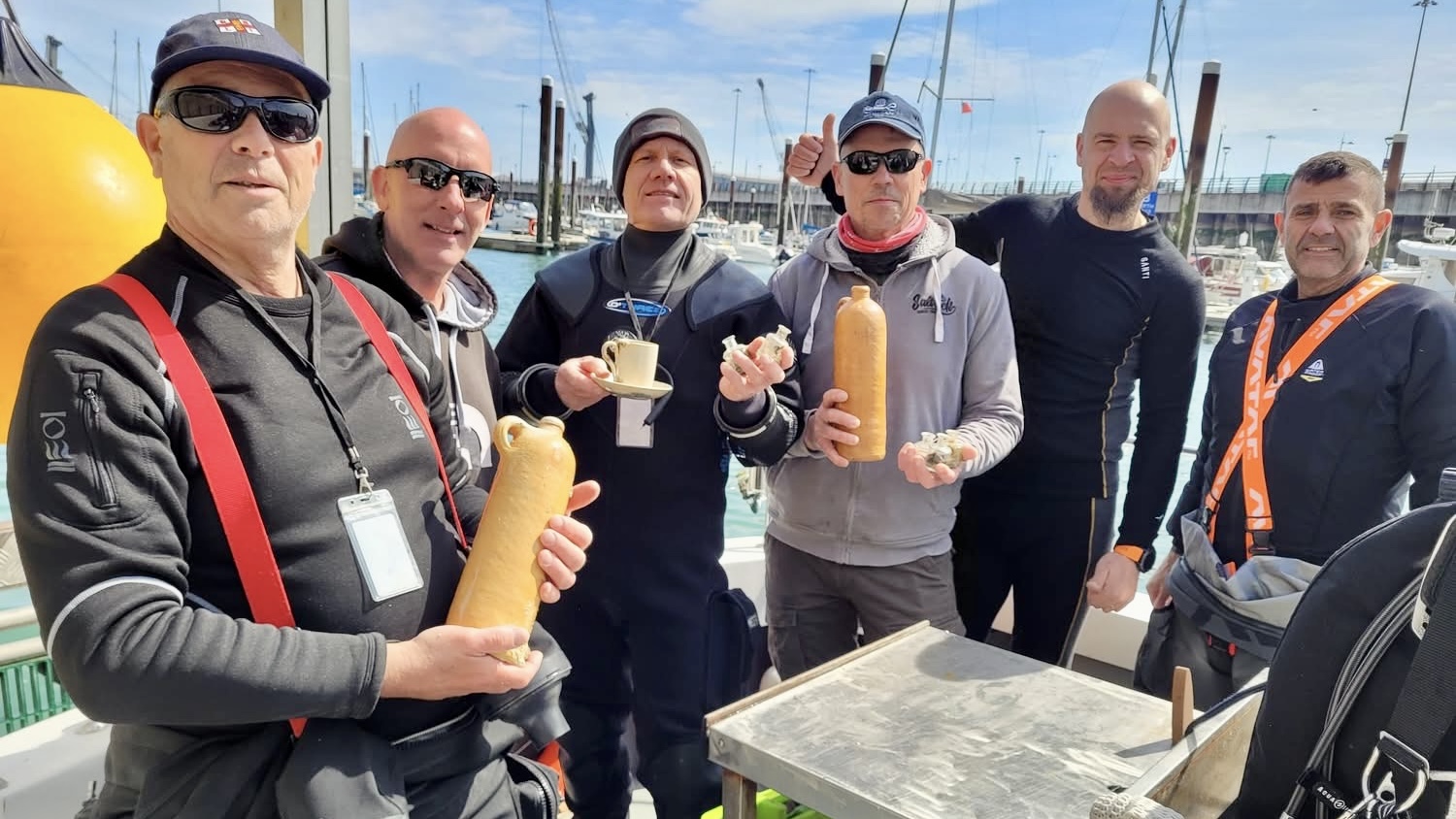
For divers, Loanda is one of those wrecks that rewards curiosity as much as good buoyancy. She lies upright in roughly 17 to 23 metres, standing several metres proud, with exposed engine remains, an intact propeller, and a cargo story worthy of a Victorian dockside whisper. Reports mention gin and champagne bottles, clay pipes, perfume bottles, trading beads, and the persistent tale of newly minted shillings, although the shilling story is not supported by the manifest. It’s shallow, atmospheric, artifact-rich and very much a slack-water dive, the kind of Dover wreck where every broken bottle and clay pipe feels like it has been waiting 116 years to be noticed.
Some wrecks come with a grand title, a tragic story and enough paperwork to keep a maritime historian quietly twitching for a week. Then there’s the Varne Wreck.It’s called the…
For divers, Loanda is one of those wrecks that rewards curiosity as much as good buoyancy. She lies upright in roughly 17 to 23 metres, standing several metres proud, with exposed engine remains, an intact propeller, and a cargo story worthy of a Victorian dockside whisper. Reports mention gin and champagne bottles, clay pipes, perfume bottles, trading beads, and the persistent tale of newly minted shillings, although the shilling story is not supported by the manifest. It’s shallow, atmospheric, artifact-rich and very much a slack-water dive, the kind of Dover wreck where every broken bottle and clay pipe feels like it has been waiting 116 years to be noticed.
Her career was brutally short. On 28 November 1864, Mindora collided in the English Channel with the Khersonese, another outward-bound sailing ship, reportedly on passage from London to Calcutta. Contemporary shipwreck listings place the collision about 8 nautical miles south-west by west of South Foreland, with Mindora sinking and the other vessel abandoned in a sinking condition. For divers, this is a proper Victorian mystery wreck: a young barque lost almost as soon as her story began, a collision in one of the world’s busiest sea lanes, and a seabed site that still gives up small clues from a long-vanished age of sail.
For divers, Loanda is one of those wrecks that rewards curiosity as much as good buoyancy. She lies upright in roughly 17 to 23 metres, standing several metres proud, with exposed engine remains, an intact propeller, and a cargo story worthy of a Victorian dockside whisper. Reports mention gin and champagne bottles, clay pipes, perfume bottles, trading beads, and the persistent tale of newly minted shillings, although the shilling story is not supported by the manifest. It’s shallow, atmospheric, artifact-rich and very much a slack-water dive, the kind of Dover wreck where every broken bottle and clay pipe feels like it has been waiting 116 years to be noticed.
Her career was brutally short. On 28 November 1864, Mindora collided in the English Channel with the Khersonese, another outward-bound sailing ship, reportedly on passage from London to Calcutta. Contemporary shipwreck listings place the collision about 8 nautical miles south-west by west of South Foreland, with Mindora sinking and the other vessel abandoned in a sinking condition. For divers, this is a proper Victorian mystery wreck: a young barque lost almost as soon as her story began, a collision in one of the world’s busiest sea lanes, and a seabed site that still gives up small clues from a long-vanished age of sail.