
Spring Tide
Spring Tide marker for general dive planning around Dover. Use as guidance only. Final dive timings depend on skipper judgement, weather, sea state, tidal data and site conditions.
Spring Tide marker for general dive planning around Dover. Use as guidance only. Final dive timings depend on skipper judgement, weather, sea state, tidal data and site conditions.
Neap Tide marker for general dive planning around Dover. Use as guidance only. Final dive timings depend on skipper judgement, weather, sea state, tidal data and site conditions.
Spring Tide marker for general dive planning around Dover. Use as guidance only. Final dive timings depend on skipper judgement, weather, sea state, tidal data and site conditions.
Neap Tide marker for general dive planning around Dover. Use as guidance only. Final dive timings depend on skipper judgement, weather, sea state, tidal data and site conditions.
Spring Tide marker for general dive planning around Dover. Use as guidance only. Final dive timings depend on skipper judgement, weather, sea state, tidal data and site conditions.

On 17 July 1880, Hydaspes was under tow by the tug Napoleon in thick fog off the Kent coast when she collided with the steamship Centurion near the Dungeness / Dover approach. The inquiry records that Centurion struck Hydaspes just abaft the fore rigging on the starboard side, cutting her down below the waterline. Passengers and crew scrambled aboard Centurion, while her master, chief mate and pilot left by the tug’s boat shortly before Hydaspes sank with everything still aboard. Crucially, the crew and passengers were saved, which is a rare civilised moment in Channel wreck history. For divers, Hydaspes has the pull of a big lost sailing ship: emigrant voyage, Australian-bound cargo, fog, collision, towline drama and a wreck story rich enough to make even a lump of iron seabed feel personal.

On 23 March 1916, Sea Serpent struck a mine laid by the German submarine UC-6, commanded by Matthias Graf von Schmettow, and sank off Folkestone Pier, at approximately 51°02’N, 01°12’E. At least two crewmen are recorded as lost: fireman George James Anderson, aged 24, and mess room boy Frederick William Barrow, aged only 16. For divers, this is a classic Channel war-loss: a modest merchant steamer, a practical cargo, a minefield off the Kent coast, and a wreck with the quiet weight of ordinary men caught in extraordinary danger.

Her end came on 20 July 1940, when she was attacked by German aircraft off Dover while engaged on Channel convoy duties. Badly damaged in the air raid, HMS Brazen later sank in the English Channel, where her wreck now lies in about 30 metres of water at roughly 51°01'N, 1°17'E. Contemporary naval records note that one member of her ship’s company was killed. For divers, Brazen is a classic south-east coast war wreck: a sleek destroyer, a Battle of Britain era loss, and a site where the story of Britain’s desperate Channel defence still clings to the metal.

Her final voyage ended in the Channel on the night of 25-26 November 1878, while returning from New York to Hamburg via Plymouth. Off Folkestone, she was struck amidships on the starboard side by the iron-hulled Welsh barque Moel Eilian, which was bound from Rotterdam to Cardiff. Four of Pommerania’s nine lifeboats were smashed in the collision, and she sank in less than half an hour. Sources vary slightly on the death toll, giving 48, 50 or 55 lives lost, but the scale of the disaster is beyond doubt. Today she lies in about 25 metres, a classic Channel liner wreck with machinery, scattered structure and real human history behind every plate and rib. For divers, this is Victorian steamship history at touching distance, and considerably more exciting than another tidy spreadsheet pretending to be a wreck.
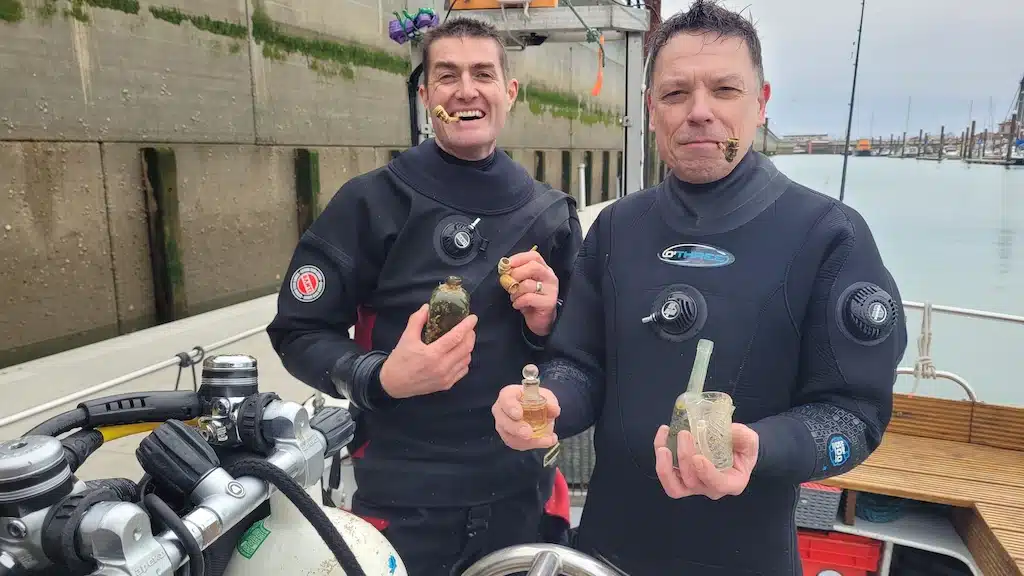
For divers, Loanda is one of those wrecks that rewards curiosity as much as good buoyancy. She lies upright in roughly 17 to 23 metres, standing several metres proud, with exposed engine remains, an intact propeller, and a cargo story worthy of a Victorian dockside whisper. Reports mention gin and champagne bottles, clay pipes, perfume bottles, trading beads, and the persistent tale of newly minted shillings, although the shilling story is not supported by the manifest. It’s shallow, atmospheric, artifact-rich and very much a slack-water dive, the kind of Dover wreck where every broken bottle and clay pipe feels like it has been waiting 116 years to be noticed.
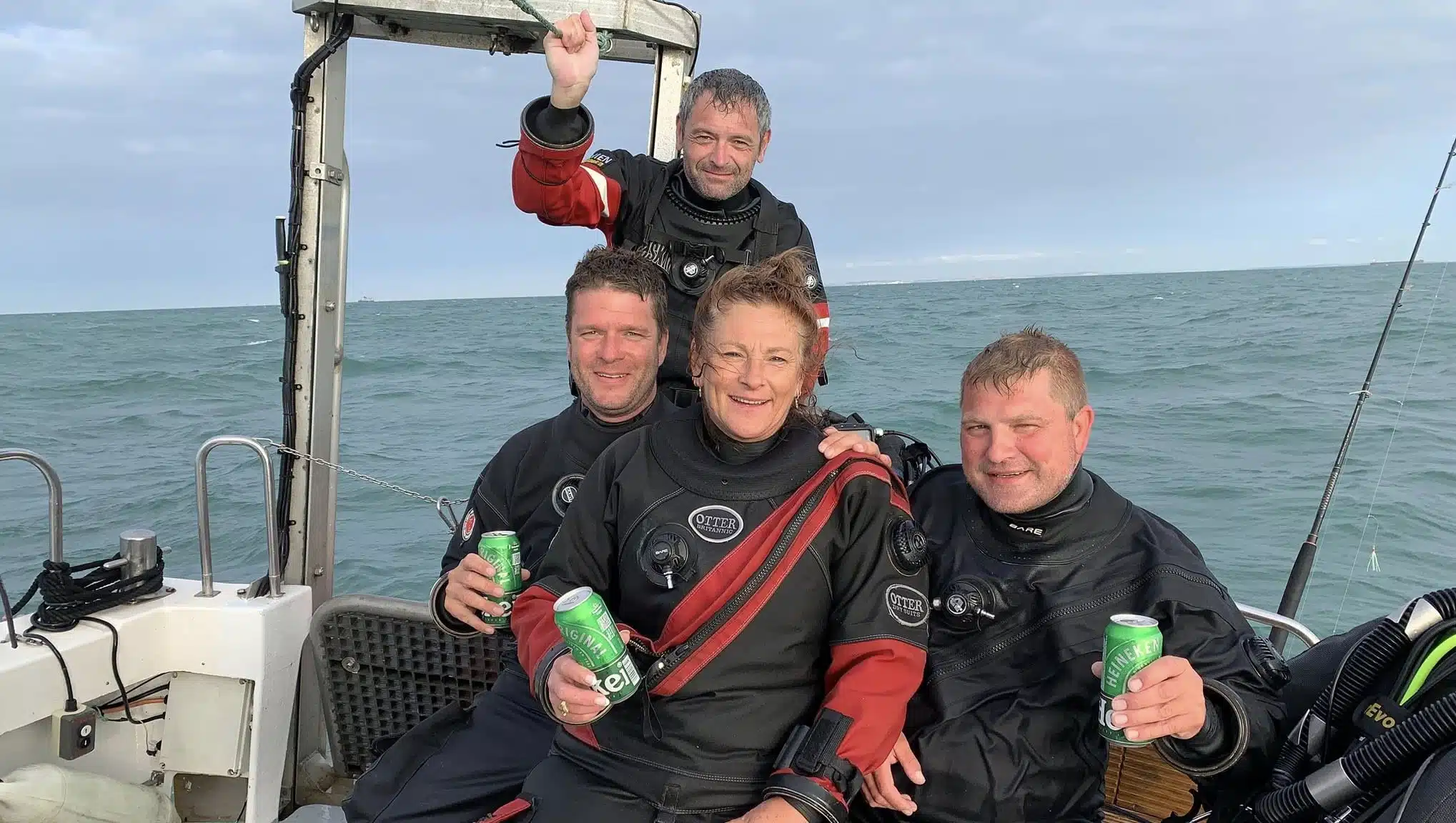
On 14 April 1916, Shenandoah struck a mine laid by the German minelaying submarine UC-6, commanded by Matthias Graf von Schmettow, and sank about 1.5 nautical miles west of Folkestone Gate. Historic England records two lives lost, with the probable wreck remains lying south of Folkestone in the Dover Strait area. For divers, this is a proper First World War Channel wreck: Atlantic trade, German mine warfare, wartime cargo, and a steel steamer lost almost within sight of home. Not flashy. Better than flashy. It has that quiet, heavy, "something happened here" feel that makes a wreck worth diving.

Her career was brutally short. On 28 November 1864, Mindora collided in the English Channel with the Khersonese, another outward-bound sailing ship, reportedly on passage from London to Calcutta. Contemporary shipwreck listings place the collision about 8 nautical miles south-west by west of South Foreland, with Mindora sinking and the other vessel abandoned in a sinking condition. For divers, this is a proper Victorian mystery wreck: a young barque lost almost as soon as her story began, a collision in one of the world’s busiest sea lanes, and a seabed site that still gives up small clues from a long-vanished age of sail.