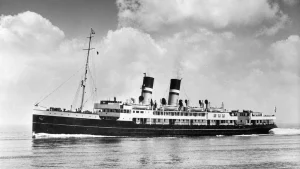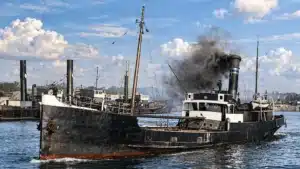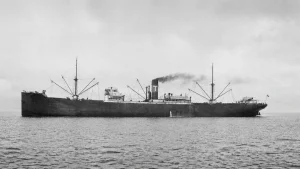

There are wrecks that announce themselves with guns, boilers and big dramatic tears in the hull. Then there is the SS Maine, sitting quietly off Dover with a seabed full of old bottles, as if someone dropped a French café into the Channel and forgot to tell the waiter.
Known locally as the “Perrier Wreck”, Maine lies in the waters off the South Goodwins, near one of the busiest and most treacherous shipping lanes in Britain. Not bad for a modest French cargo vessel that now leaves divers asking the same question again and again: Why is the seabed covered in bottles marked “Eaux Artificielles”? [+]
And yes, before someone in the back starts polishing their pedantry goggles, “Eaux Artificielles” translates roughly as artificial waters. In early bottled-water language, that usually meant manufactured or carbonated mineral waters, soda waters, or similar fizzy medicinal/table waters. The human race really did make bubbly water sound like a pharmacy experiment. Tremendous work, everyone.
The ship: a small French cargo steamer
The SS Maine was a French steel steam cargo vessel, built in 1900. The best wreck-summary data I found gives her as 439 gross register tons, with dimensions of roughly 50.5 m by 7.4 m, steel-built, steam powered, and used for transport. [+]
Lloyd’s Casualty Return for 1914 confirms a French vessel named Maine, listed as 439 gross tons, 199 net tons, and recorded as lost by collision off Dover on 2nd April 1914. [+]
So she was not a grand liner. She was a practical coastal cargo steamer. The sort of ship that moved everyday goods through crowded waters while bigger names got the headlines. In other words, the maritime equivalent of the bloke doing the hard graft while the posh yacht gets photographed.
Where she was lost
Maine went down in The Downs, off Dover, near the South Goodwin Lightship. This area mattered then and still matters now. The Downs gave ships anchorage off the Kent coast, sheltered to some degree by the Goodwin Sands, but the comfort came with teeth.
The Goodwins are not gentle. They shift, catch, swallow and confuse. Add dense traffic, poor visibility, tide, steam navigation, and ships crossing routes, and you’ve built a maritime pinball machine with boilers.
The collision
On 2nd April 1914, Maine was in collision with the Spanish vessel José de Aramburu. Contemporary wreck listings record that Maine collided with José de Aramburu in the English Channel and sank, with her crew rescued by the Spanish ship. [+]
That matches the local account you had: the crew were reportedly taken aboard José de Aramburu and landed at Dover. I found support for the crew-rescue element, but I have not found a primary newspaper report yet confirming the exact Dover landing detail. Annoying, yes. History loves hiding the useful sentence behind a paywall, a smudged scan, or someone’s biscuit tin.
What we can say with confidence:
Maine was lost by collision off Dover on 2nd April 1914. Lloyd’s records her as a French vessel of 439 gross tons. The other vessel was José de Aramburu. The crew survived and were rescued by José de Aramburu.
The other ship: José de Aramburu
José de Aramburu was a Spanish steamship from Santander. She survived the 1914 collision with Maine, but her luck had a sell-by date.
Lloyd’s Casualty Returns for 1915 record José de Aramburu as a Spanish steel screw steamer of 2,388 gross tons, travelling Bilbao to Cardiff with iron ore, when she struck the Runnelstone and sank in deep water on 6th May 1915. [+]
A French newspaper report from May 1915 also described José de Aramburu, of Santander, bound from Bilbao to Cardiff, sinking near Land’s End after striking a rock, with the crew landed at Penzance. [+]
So the ship that helped save Maine’s crew was herself gone little more than a year later. The sea does irony. It simply lacks the decency to smirk.
Why did Maine sink?
The plain answer is: collision damage caused flooding, and Maine foundered.
Lloyd’s puts her under collision losses, with the place given as off Dover and the date as 2nd April 1914.
We do not yet have enough detail to say whether José de Aramburu struck Maine amidships, forward, astern, or opened her below the waterline in a specific compartment. But given Maine’s small size, at 439 gross tons, a heavy impact from a much larger Spanish steamer would have been catastrophic.
Think of it as a Channel shipping version of a shopping trolley meeting a delivery lorry, except both had boilers and nobody had radar.
The Perrier question
Now we get to the fun bit.
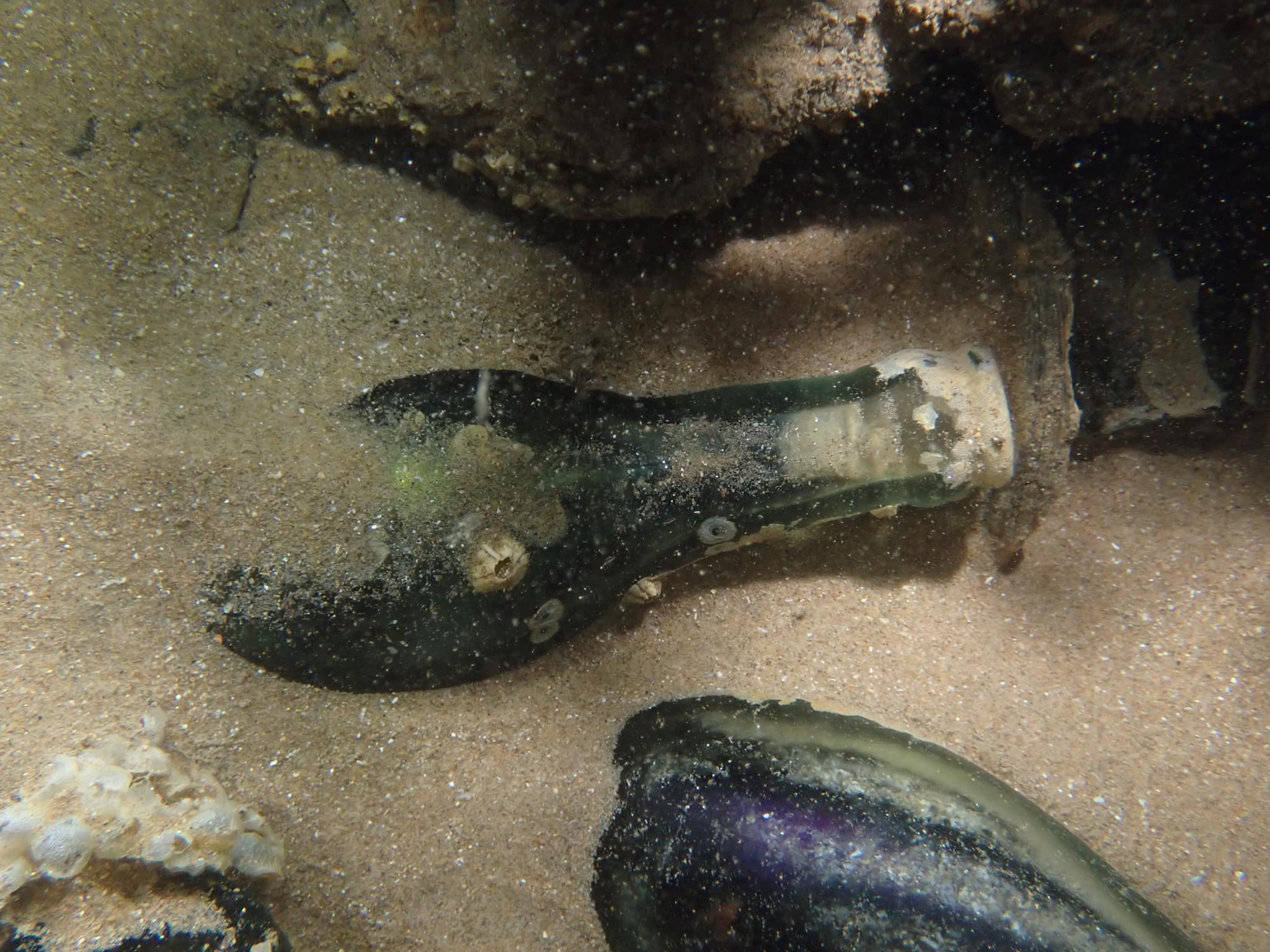
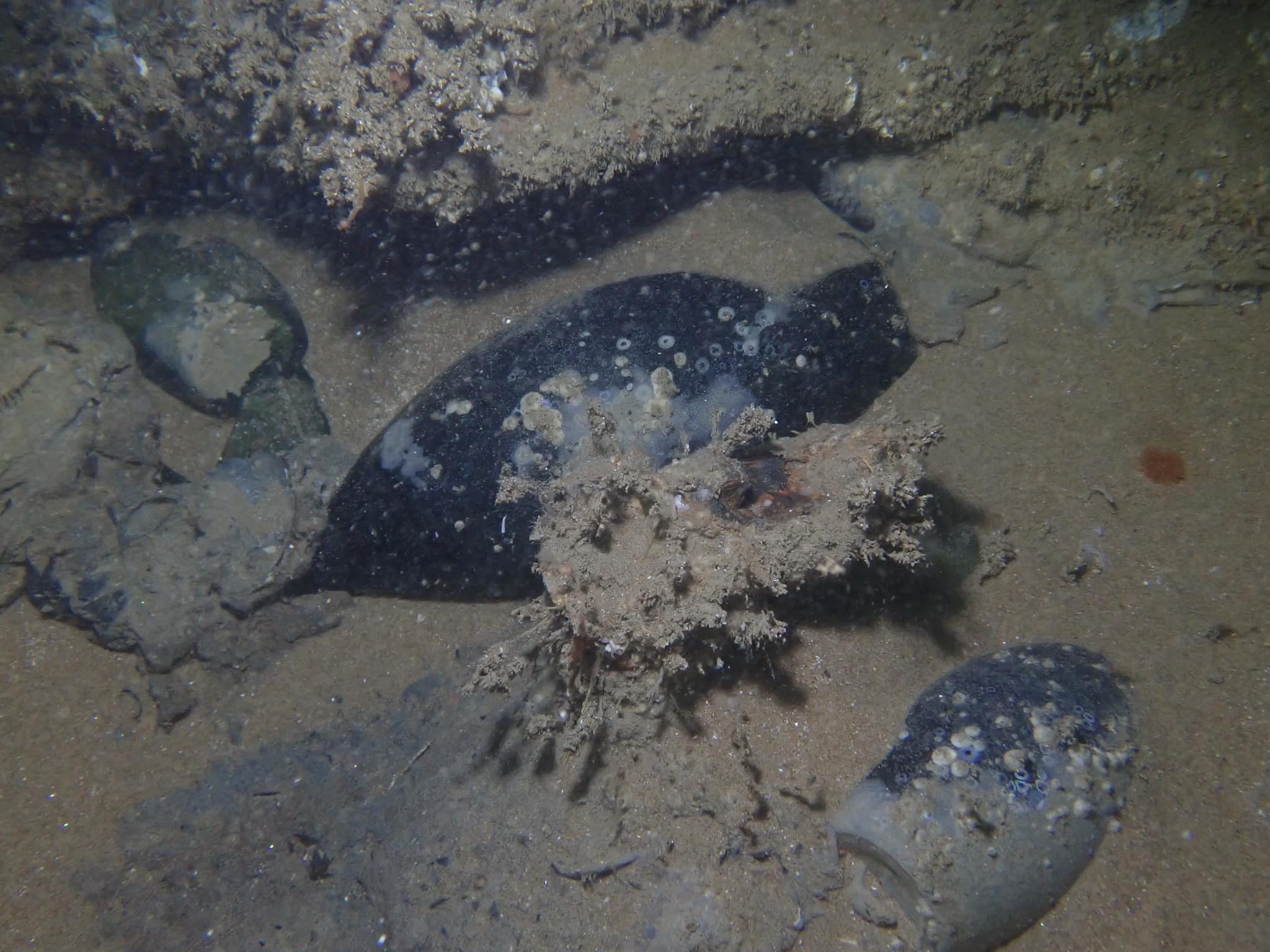
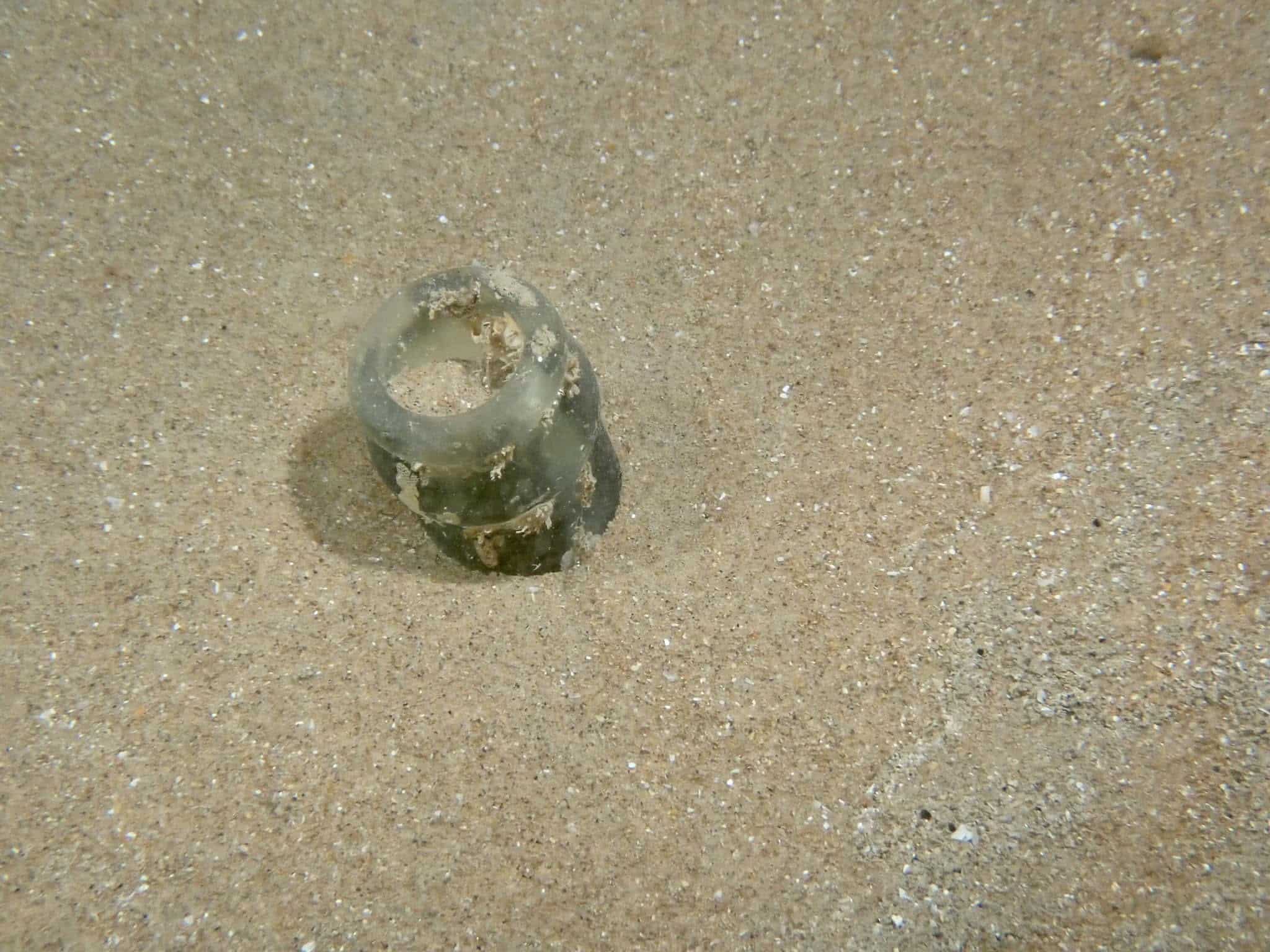
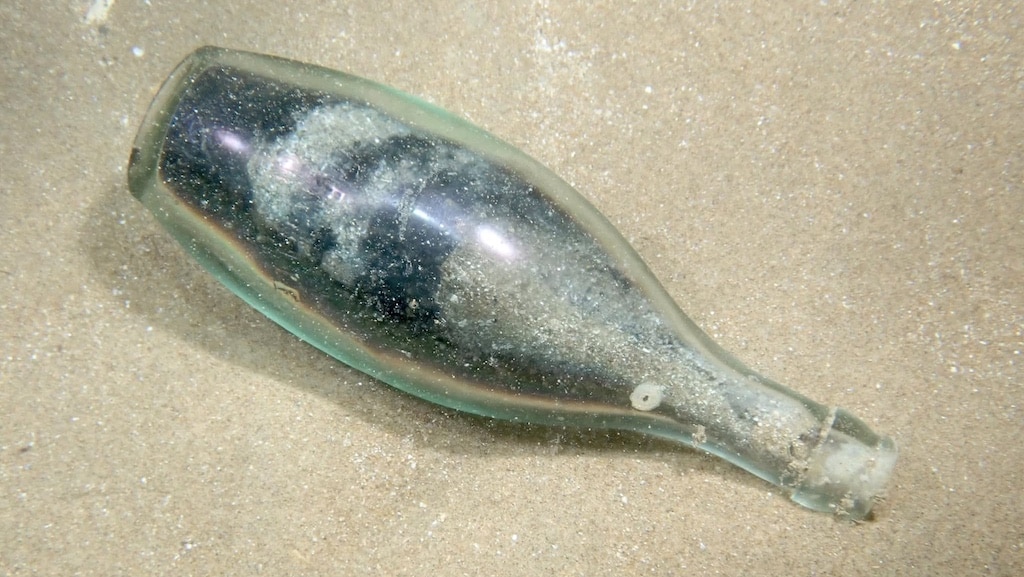
Divers know the wreck as the “Perrier Wreck” because of the number of bottles found on and around the site. Local diving accounts describe bottles marked “Eaux Artificielles”, and link the wreck to Perrier water. [+]
That is plausible, but it needs a careful hand.
Perrier’s commercial story fits the date beautifully. Dr Louis Perrier had bought the spring at Vergèze in 1898, and Sir St John Harmsworth became involved in 1903, helping turn the water into a major bottled brand. Perrier’s own history says Harmsworth bought the source, renamed it after Dr Perrier, and began bottling it in distinctive green bottles. [+]
By the early 1900s, bottled mineral waters and fizzy table waters were booming. A history of bottled water notes that consumption grew strongly between the mid-19th century and 1914, including mineral waters, medicinal waters, soda waters and eaux artificielles. [+]
So yes, Maine carrying bottled French sparkling water in 1914 makes sense.
But here is the sober bit, because apparently we must be accurate rather than wildly theatrical. I have not found a formal cargo manifest listing “Perrier” by name. The wreck evidence strongly supports a cargo including bottled carbonated or mineral waters. The local name “Perrier Wreck” may be correct, but the bottle marking “Eaux Artificielles” does not, by itself, prove every bottle was Perrier.
It proves something even more interesting: Maine was carrying the sort of bottled French fizzy water that was becoming fashionable in Britain just before the First World War.
What divers may still see
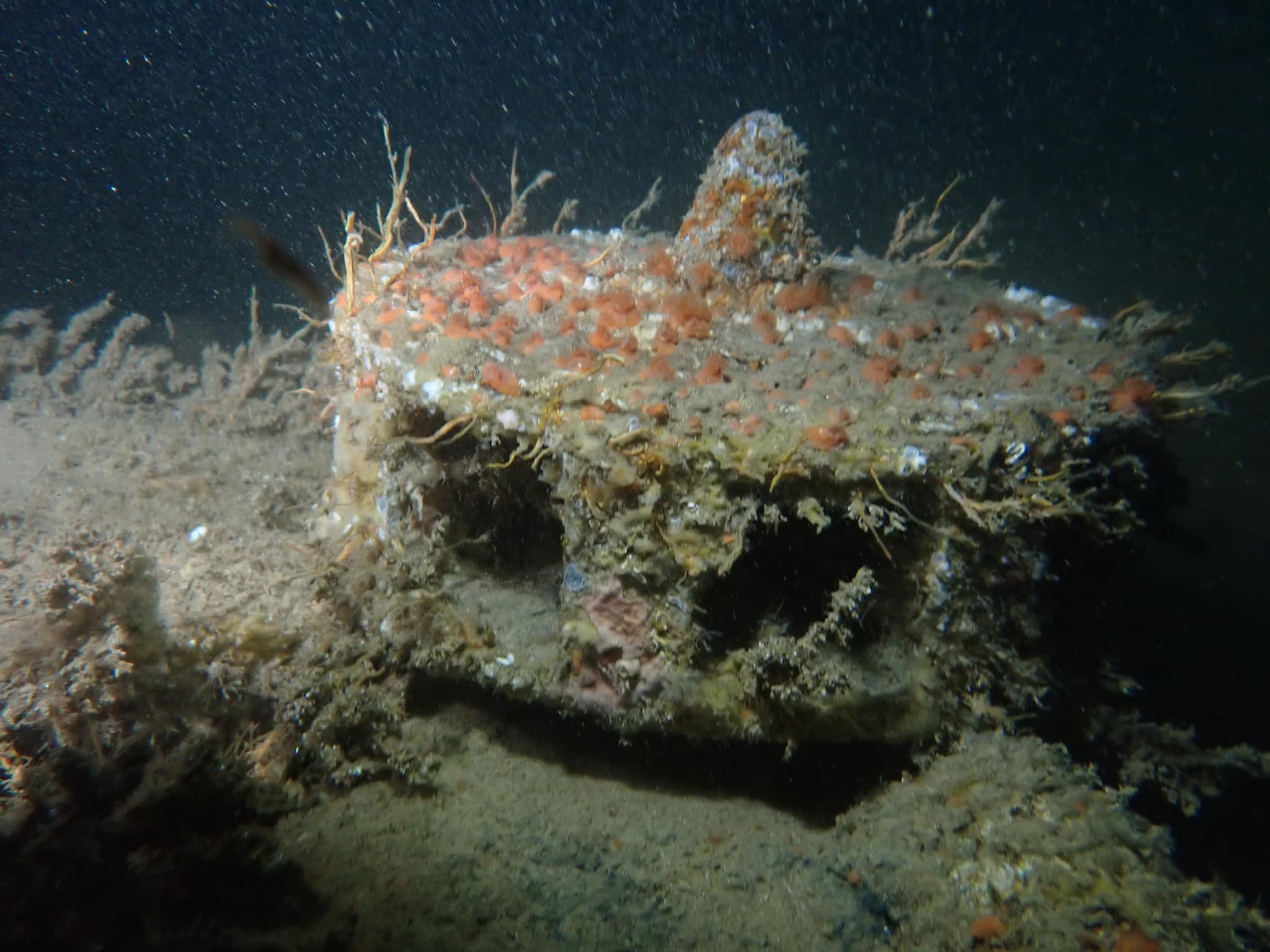
The wreck sits as a modest but fascinating Channel site. Local dive listings put the Perrier Wreck in the 24 to 29 m range, making it a shallower Dover wreck compared with deeper Channel casualties.
The bottles are the signature artefact. They turn the site from “another collision loss” into a proper story. A French cargo steamer, a Spanish rescuer, Dover, the Goodwins, and a cargo of bubbly water quietly settling into the seabed. That is exactly why wreck diving around Dover is so addictive. The metal matters, yes. But the cargo gives the wreck its voice.
Coal tells you industry. Ammunition tells you war. Bottled water tells you trade, fashion, health, advertising, and a Europe still behaving as if the summer of 1914 would be perfectly normal.
The historical moment
Maine sank in April 1914. Four months later, Europe was at war. That gives the wreck a strange position in time. She was not a war loss. No U-boat stalked her. No minefield took her. No naval gun sent her down.
She belongs to the last months of the old civilian Channel trade, before the Dover Strait became a far darker corridor. Ships were still carrying everyday goods. Bottled water. General cargo. Commercial necessities. The machinery of ordinary life. Then August came along and ruined everything, as August 1914 had a rather serious talent for doing.
The SS Maine in brief
Name: SS Maine
Nationality: French
Type: Steel steam cargo vessel
Built: 1900
Tonnage: 439 GRT, 199 NRT
Approx. dimensions: 50.5 m x 7.4 m
Loss date: 2nd April 1914
Place of loss: Off Dover, near the South Goodwins
Cause of loss: Collision with Spanish steamer José de Aramburu
Crew: Rescued by José de Aramburu
Local name: The Perrier Wreck
Known cargo clue: Bottles marked “Eaux Artificielles”
Depth: Often given locally as around 24 to 29 m
Final thought
The SS Maine is not famous because she was large. She is not famous because she was armed. She is not famous because she changed the course of history. She is remembered because she left behind a wonderfully odd calling card: a scatter of old French bottles on the seabed off Dover.
And that is the charm of her. A small French steamer, struck in busy waters, her crew saved, her cargo spilled, her story half-buried in sand, rust and glass. The sea kept the wreck. The divers found the bottles. And now the Perrier Wreck still fizzes quietly in Dover’s memory, which is more than most cargo manifests manage after 110 years.
Related Dover wrecks
If this story interests you, you may also enjoy these other Mutiny Diving wreck features: