
U-Boat SM UB-78 (1918)
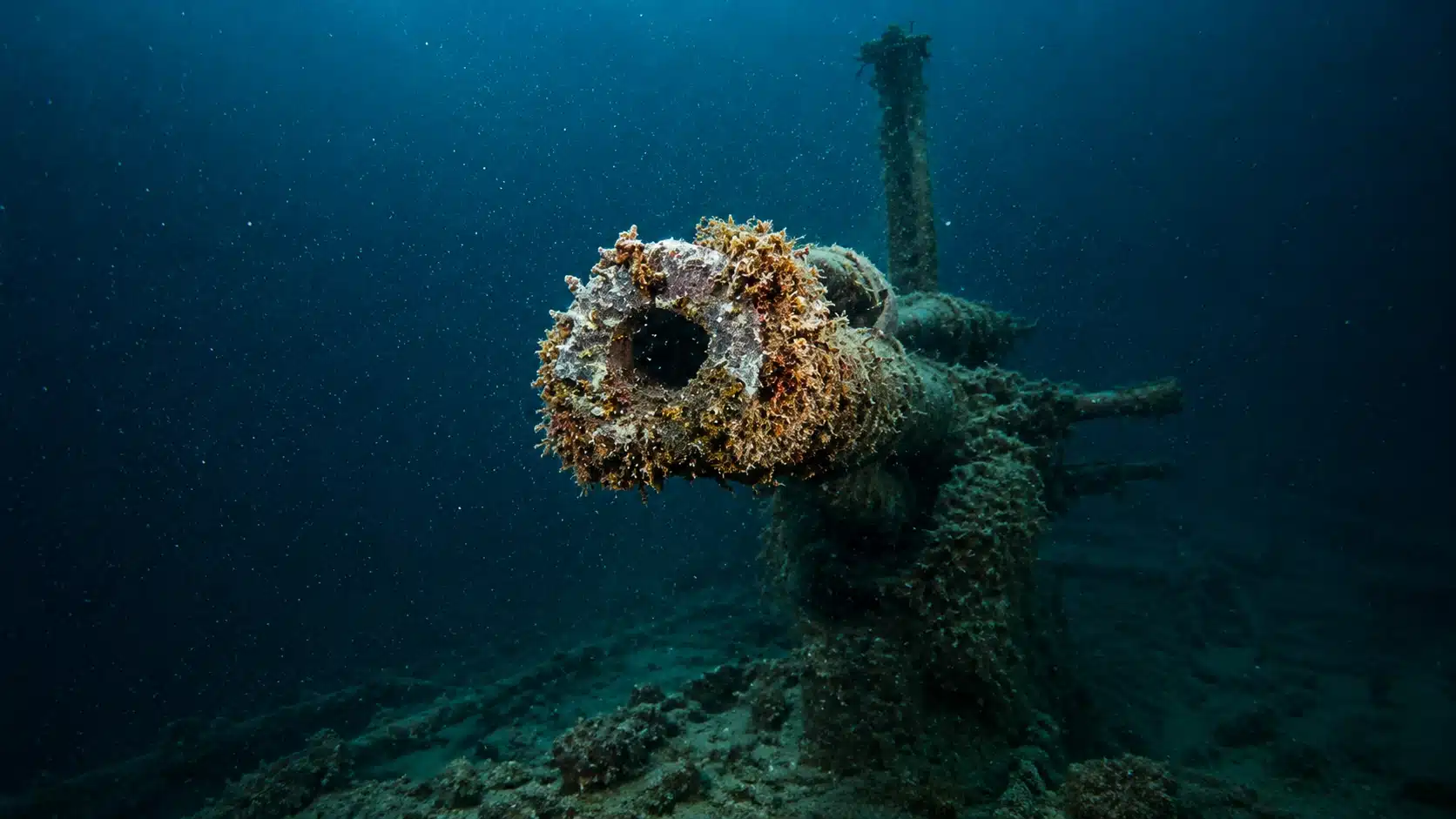
SM UB-78 wreck dive
The SM UB-78 wreck dive explores a German Type UB III submarine lost off Dover in 1918. UB-78 tried to pass through the heavily defended Dover Strait, but a mine stopped her final patrol. As a result, all 35 men aboard died.
This SM UB-78 wreck dive takes you into one of the hardest First World War choke points around the Kent coast. By 1918, the Dover Barrage had become a serious obstacle for U-boats operating from Flanders. Therefore, any submarine trying to force the Strait faced mines, patrol craft, nets, lights and listening systems.
SM UB-78 wreck dive: the submarine before the loss
Blohm & Voss built UB-78 at Hamburg as yard number 307. Germany ordered her on 23 September 1916, launched her on 2 June 1917 and commissioned her on 20 October 1917. During her short career, three officers commanded her: Woldemar Petri, Ulrich Pilzecker and Arthur Stoßberg.
UB-78 belonged to the Type UB III class. These late-war submarines carried torpedoes, an 8.8 cm deck gun and enough range to threaten Allied shipping beyond the immediate Belgian coast. In addition, their size and capability made them far more dangerous than the small early-war coastal boats.
She first served with the V Flotilla, then joined the Flandern I Flotilla in February 1918. From there, she took part in the U-boat campaign against Allied traffic in and around the Channel. Uboat.net credits her with two ships sunk and two ships damaged during five patrols.
The mine loss off Dover
On 19 April 1918, UB-78 attempted to pass through the Dover Strait. However, the British had strengthened the Dover Barrage into a layered defensive barrier. Mines formed a central part of that system, supported by patrol vessels and other detection methods.
UB-78 struck a mine off Dover and sank with all hands. Uboat.net records the loss position as 51.01N, 01.17E. Meanwhile, Wessex Archaeology describes the wreck as lying off Folkestone, where later survey work recorded the submarine in two main sections.
The wreck evidence fits a violent mine loss. Wessex Archaeology records that the submarine lies almost fully exposed and split into two sections. In addition, the report states that the separation probably happened during the sinking, after one or more mine explosions.
You can read the vessel record in Uboat.net’s UB-78 entry. Meanwhile, the archaeological survey background appears in Wessex Archaeology’s UB-78 survey note.
The wreck today
SM UB-78 is a Protection of Military Remains Act 1986 designation order. Divers may visit the site, but they must not disturb the wreck, recover artefacts or enter the submarine. In practical terms, this is a look-only war grave dive, and the site deserves the same respect you would give any military maritime grave.
For divers, UB-78 offers a powerful Dover Strait submarine wreck with clear First World War context. The site lies off Folkestone and forms part of the wider military landscape of the Dover Barrage. Therefore, the dive connects directly with the British effort to close the Channel route to German submarines.
The wreck also carries war-grave weight. All 35 men aboard died, including the final commander, Oberleutnant zur See Arthur Stoßberg. As always with U-boat wrecks, divers should treat the site with respect and avoid disturbance, because the seabed is not a souvenir counter, despite humanity’s heroic efforts to behave otherwise.
Older sources confused UB-78 with UC-78 and with a ramming incident involving the troopship Queen Alexandra. However, Uboat.net now records that local divers discovered and identified UB-78, while the Queen Alexandra incident accounted for UC-78. Consequently, the Folkestone wreck is best treated as UB-78, lost to a Dover Barrage mine on 19 April 1918.
Are you a Mutiny Diver? Book more dives.