

Some wreck dives begin with a set of coordinates and a name. This one began with a question: could a wreck lying in the Dover Strait be Hosanna, the fishing vessel that disappeared in February 1980 with all five men aboard?
For more than 46 years, nobody could answer that question with certainty. In the summer 2026, Mutiny Diving was pleased to assist a Dutch investigation into the loss of Hosanna. Working from Maverick, Mutiny Divers carried out an investigation dive on the wreck, followed by a second dive on Thursday, 24th September, when its identity was confirmed. It was the culmination of years of research by others, and a privilege for us to play a part in finally putting a name to the wreck.
Working together to investigate Hosanna
The investigation brought together people from the Netherlands and the UK, each bringing a different part of the story together.
Dutch producer Mary Kragtwijk works with EO (Evangelische Omroep), one of the Netherlands’ public broadcasters. Mary and her production team were following the investigation for the second series of Op zee gebleven, an EO documentary series examining fishing vessels lost at sea, the people who disappeared with them and the families left searching for answers.
Working alongside the production team was Cees Meeldijk, chairman of Stichting Onderzoek Maritieme Vermisten (SOMV). Cees is a fisherman and maritime historian, and the foundation specialises in investigating long term maritime disappearances. Its work combines archive research, historical records and modern maritime technology, often working alongside relatives, police, cold-case teams and specialist divers to locate and identify vessels that have remained missing for decades. Cees and SOMV had already investigated a number of missing Dutch fishing vessels when their research into Hosanna brought the story across the North Sea and into the Dover Strait.
That was where Mutiny Diving could help. The production team needed experienced local divers capable of investigating a deep unidentified wreck in one of the busiest and most demanding stretches of water in the world. Mutiny Diving had Maverick, local knowledge of the Dover Strait, an experienced group of wreck divers and, importantly, a wreck that deserved a much closer look. The resulting investigation, including the search for Hosanna and the eventual confirmation of her identity, is being documented for the second

Hosanna before the mystery
Hosanna already had a colourful history long before she disappeared. The 25 metre Belgian fishing vessel was built in Zeebrugge in 1965 and became Z.592 Hosanna, operated by the Belgian company De Pax. Madeleine De Paep was the company’s manager, while her husband, Germain Ackx, became closely associated with the vessel as her skipper. During the 1970s, Hosanna became known far beyond the fishing industry. She was one of the vessels associated with supplying the offshore radio ship Mi Amigo, used by Radio Caroline and other offshore broadcasters. Contemporary offshore-radio accounts repeatedly mention Germain Ackx and Hosanna carrying fuel, equipment and people to Mi Amigo.
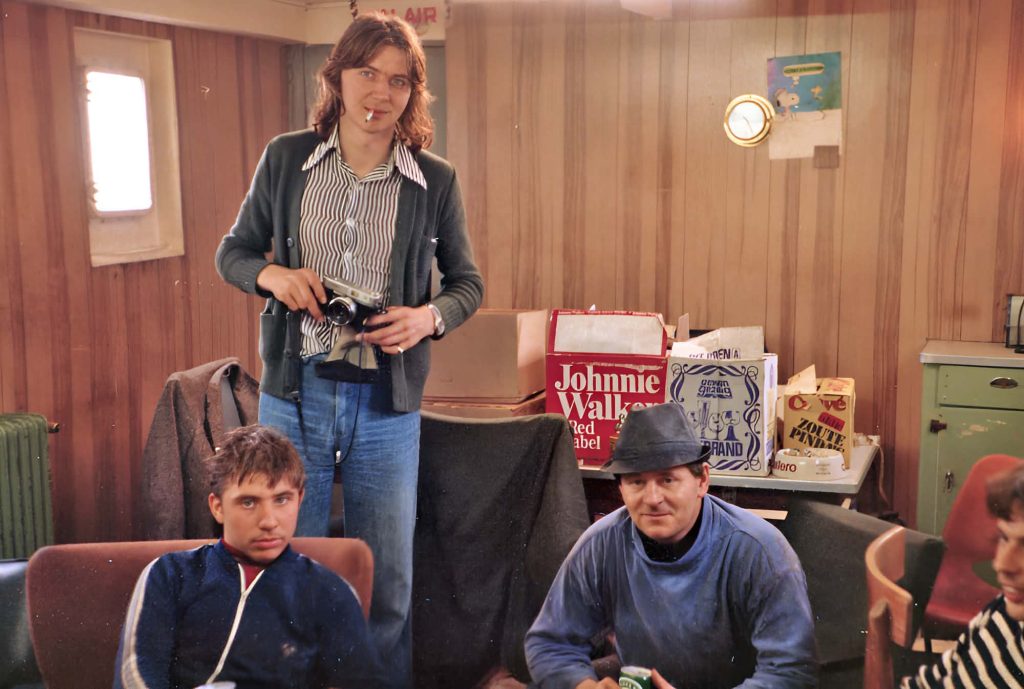
That activity also attracted the attention of the authorities. Supplying offshore radio stations operating outside national broadcasting laws was hardly the quiet life of an ordinary fishing vessel, and Hosanna entered the final years of her life with something of a reputation. That reputation would later help fuel some extraordinary theories about what happened to her.
A vessel already in trouble
On 20th July 1979, Hosanna ran aground and suffered considerable damage. This part of her history is not based on rumour. It later appeared in proceedings before the European Court of Justice concerning the death of one of her crew. The court recorded that Hosanna had been declared unseaworthy following the grounding. Under Belgian law, the prohibition on sailing could only be lifted after approved repairs had been completed, yet the judgment states that those repairs were not carried out. Despite that, Hosanna would go to sea again.


On 29th January 1980, she was sold to the British company Minerva Fisheries Ltd and registered under the British flag. The change was more curious than a simple sale. Germain Ackx and Madeleine De Paep jointly owned half of Minerva Fisheries, while the other half belonged to an O’Connor and his wife. So although Hosanna had formally changed ownership and nationality, Ackx and De Paep still retained a substantial financial interest in her.
Hosanna’s outward identity changed as well. The former Belgian Z.592 was given the Guernsey fishing number GU5200. Why Guernsey was chosen remains an interesting part of the vessel’s final chapter, particularly because the people who had controlled her in Belgium still retained half of the company that had bought her. We do not yet know whether that choice was simply practical or whether there was another reason behind it.
Hosanna's final voyage
Less than three weeks later, Hosanna was gone. She left Plymouth on 14th February 1980, reportedly at around 18:30, bound towards the Netherlands. Five people were aboard: skipper Germain Ackx, his son Piet Ackx, Hector Snauwaert, Pieter Guijt and Pieter’s 14-year-old nephew, Pieter Albertus Guijt.
Somewhere during the passage through the Dover Strait, something went badly wrong. Communications records help narrow the period in which Hosanna disappeared. At 21:28 UTC on 15th February, an attempt was made to establish a ship-to-shore telephone connection between Germain Ackx aboard Hosanna and his wife in Belgium. The call was not completed, but the record is significant because it places Hosanna in communication late that evening.
The following morning brought the first physical evidence that something had happened. At around 09:20 on 16th February, a liferaft associated with Hosanna was found near the Goodwin Sands. A search followed, but Hosanna was nowhere to be found. Neither were the five people aboard her.

A ship that appeared everywhere
When a vessel disappears without leaving a known wreck, rumours tend to fill the empty space. Hosanna supplied plenty of material. Stories circulated that she had not sunk at all. She had supposedly been seen in Morocco, while other alleged sightings placed her in Spain and Greece. Some accounts suggested she had headed towards Africa. There were also claims involving smuggling, drugs and deliberate disappearance. One story even claimed that someone had subsequently sat in a Scheveningen cafe with one of the supposedly missing crewmen.
None of it produced Hosanna. The rumours were helped by the vessel’s history. Germain Ackx’s connections with offshore radio, Hosanna’s previous brushes with the authorities, her recent change of ownership and registration, and the absence of a known wreck gave conspiracy theories plenty of room to grow.
For decades, the possibility remained that Hosanna had somehow survived. We now know that she did not. The identification of the wreck in the Dover Strait finally ends that part of the mystery. Hosanna never escaped to Morocco, Spain, Greece or anywhere else. She sank in the Dover Strait.
Was Hosanna run down?
Another theory has proved far more persistent. Hosanna was sometimes said to have been run down by the British bulk carrier Derbyshire. It is easy to see how such a theory developed. The Dover Strait is one of the busiest shipping lanes in the world, conditions at the time were poor, and accounts of the search include radar information suggesting that a small vessel and a larger vessel had approached one another before the smaller echo disappeared. But a theory is not evidence. Even later discussions within the offshore radio community that repeated the Derbyshire story acknowledged that the collision was an assumption rather than a certainty.
There is also a serious problem with the timeline. A later claim by Dirk Pitt placed a collision involving Derbyshire at about 13:25 on 15th February 1980. Yet communications records place Hosanna attempting a ship-to-shore telephone connection at 21:28 UTC that evening, and Dover radar records describe two echoes converging at about 23:00 before the smaller echo disappeared. Those timings are difficult to reconcile with a collision involving Derbyshire at 13:25 earlier that day. At present, we have seen no contemporary evidence proving that Derbyshire collided with Hosanna.
Could Hosanna have been run down by another vessel? Possibly. Could something else have caused her loss? Also possibly. Finding Hosanna answers one enormous question, but it does not automatically answer the next one. Why did she sink?

The first dive
That was the background when Mutiny Divers first went down to investigate the wreck. This was not simply another day’s wreck diving. There was a real possibility that the vessel below us was connected to five people who had been missing since 1980.
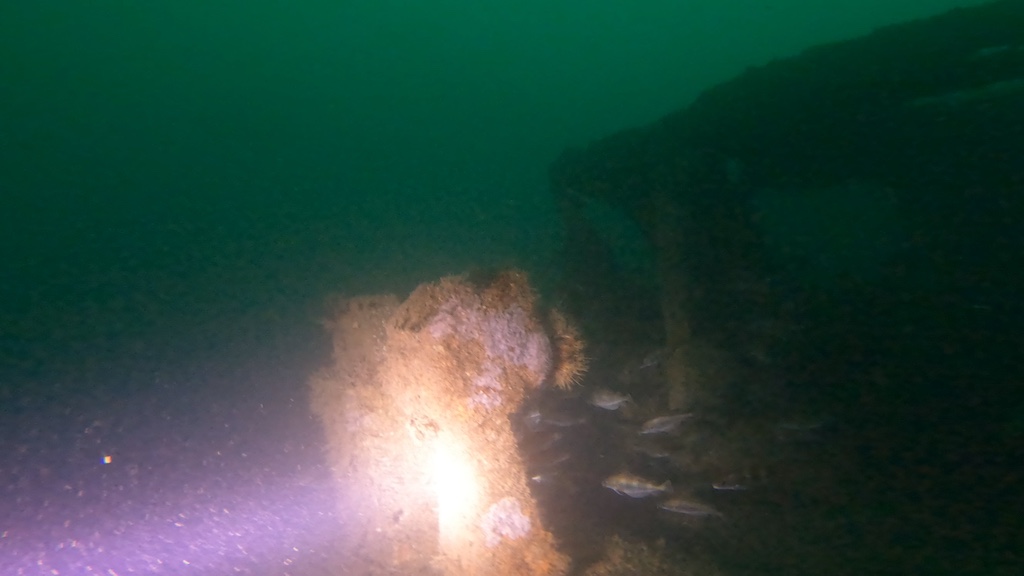
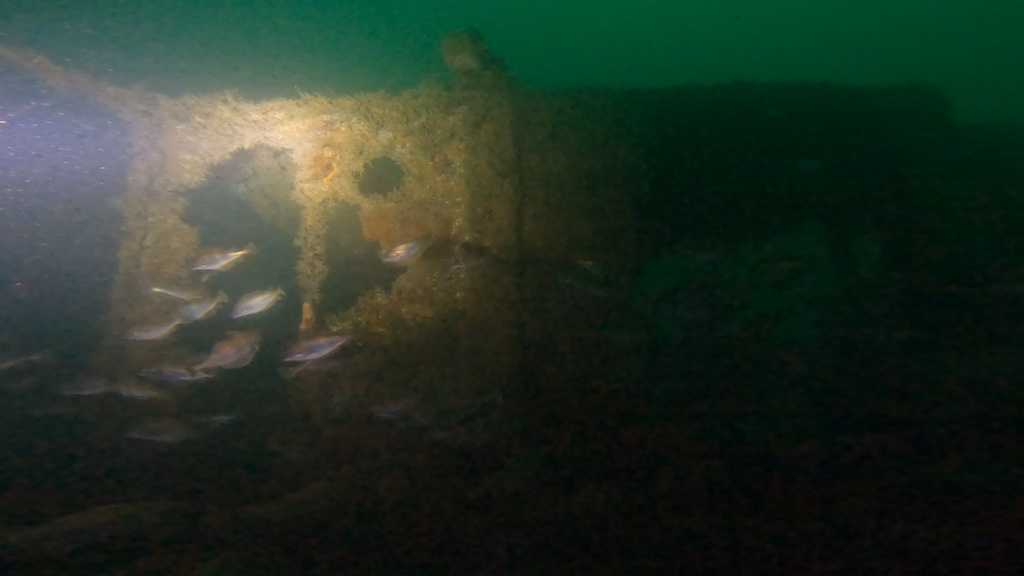
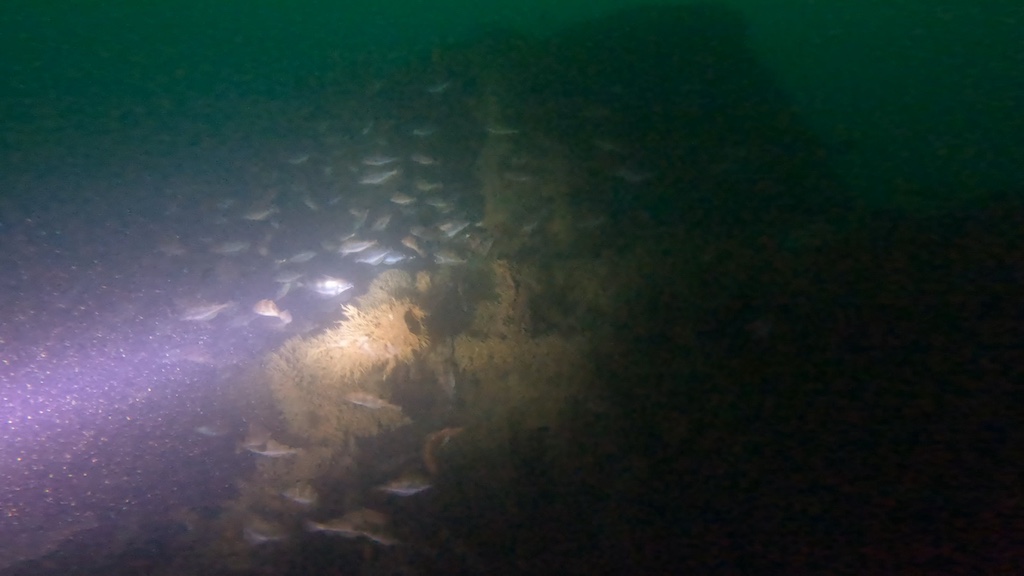
The first dive was an investigation dive. The wreck lies deep enough that bottom time matters, with the working deck around 47 metres and the surrounding seabed reaching approximately 52 metres.
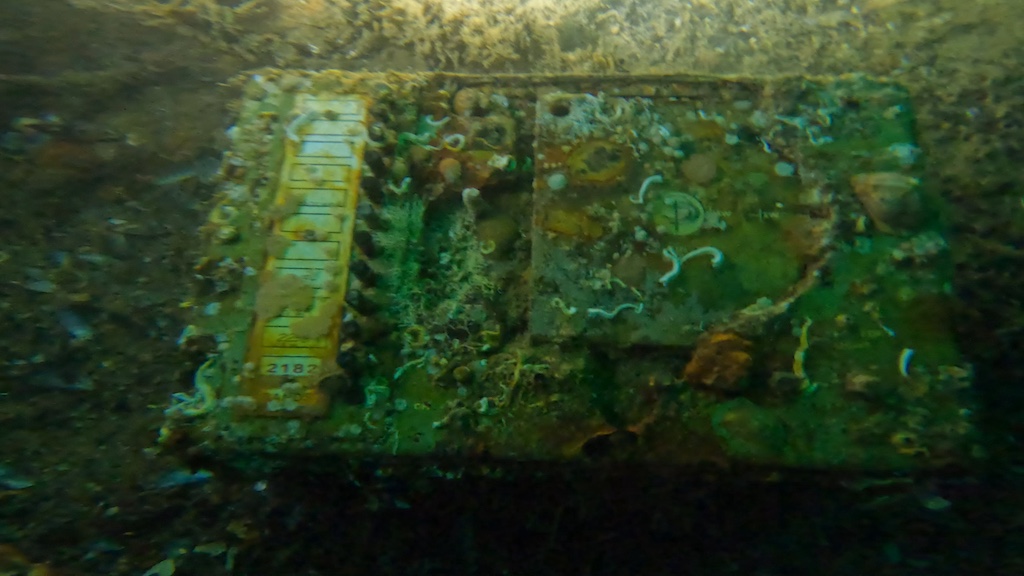
One of the first important observations was that the wheelhouse was no longer standing. That removed one of the most obvious places where identifying features might have survived, but the dive did not leave us empty handed. Among the remains we located a lamp, while video footage was also obtained from the accommodation and living area associated with the former wheelhouse structure. That footage changed the direction of the investigation. What could be seen inside the wreck suggested that there might still be evidence capable of establishing the vessel’s identity conclusively. When the footage was reviewed, interest in returning to the wreck increased considerably, particularly for Cees Meeldijk and members of the Guijt family. There was now a clear reason for a second dive.

The confirmation dive
On Thursday, 24th September 2026, Maverick returned to the site. Members of the Guijt family were present in Dover as the investigation reached what everyone hoped would be its conclusion. For them, this was not simply an unidentified fishing vessel on the seabed. Pieter Guijt and his young nephew Pieter Albertus Guijt had disappeared aboard Hosanna 46 years earlier.
The purpose of the second dive was different from the first. The first dive had investigated the wreck and produced the footage that justified going back. The second was intended to answer the question that had followed Hosanna since 1980, was this really her?
Mutiny Divers returned to the wreck and concentrated on the areas highlighted by the first dive. Evidence found during the dive provided the confirmation that had been missing for more than four decades. The wreck was Hosanna. For the moment, we are deliberately not publishing the precise details of every artefact or identifying feature involved in that confirmation. Those details form part of the wider investigation and the story still being documented. What matters is that the uncertainty is finally over. After 46 years, Hosanna had been positively identified.
More than another wreck
The Dover Strait contains thousands of wrecks. Some are famous, while others have been reduced to scattered steel and forgotten names. Occasionally, though, there is a wreck whose identity matters for reasons far beyond diving. Hosanna was one of those.
For 46 years, her disappearance left room for rumours, supposed sightings and competing theories about what happened to the vessel and the five people aboard her.
The investigation involving Cees Meeldijk and Stichting Onderzoek Maritieme Vermisten brought the search to the Dover Strait. Mary Kragtwijk and the EO production team documented that investigation for the forthcoming second series of Op zee gebleven. Mutiny Diving provided Maverick, local knowledge and the divers needed to investigate what lay below.
We were happy to help.
The full story of the investigation, including the search for Hosanna and the people whose lives have remained connected to her disappearance for more than four decades, is scheduled to be broadcast by EO in June 2027. There is still another question to investigate: what happened to Hosanna during her final hours? The wreck may yet help answer that.
But one mystery is over. After 46 years, Hosanna has a position on the chart again.
Hosanna never disappeared. We simply did not know where she was.
“Every unidentified wreck has a story. With Hosanna, five people and their families were at the centre of that story. We had the boats, the local knowledge and the divers needed to investigate what was down there. To be able to play our part in confirming her identity after 46 years was a real privilege.” – Chris Webb, Mutiny Diving
“The wreck itself wasn’t newly discovered. What had been lost was its identity. The research was about taking records written in 1980, understanding what they actually meant geographically and then comparing that evidence with what we could see underwater. When those two sides of the investigation began matching, the case for Hosanna became increasingly difficult to ignore. For me, one of the most important breakthroughs was realising that references to CS2 in the original search records could not be interpreted using today’s buoy positions. Once the historic changes to the Dover Strait buoy system were understood, the geography of the case started to make much more sense.” – Mark Lewis, wreck researcher and diver
For Journalists and Media
For interviews, additional background or media enquiries relating to the identification of Z.592 Hosanna, please contact Chris Webb at Mutiny Diving or Mark Lewis, wreck researcher and diver, via our contact form.
Historic photographs of Hosanna and her crew may be available for editorial use, subject to reproduction rights. Underwater photographs and video from the investigation are not currently available for general media release, as this material is being retained for the forthcoming EO television documentary.


